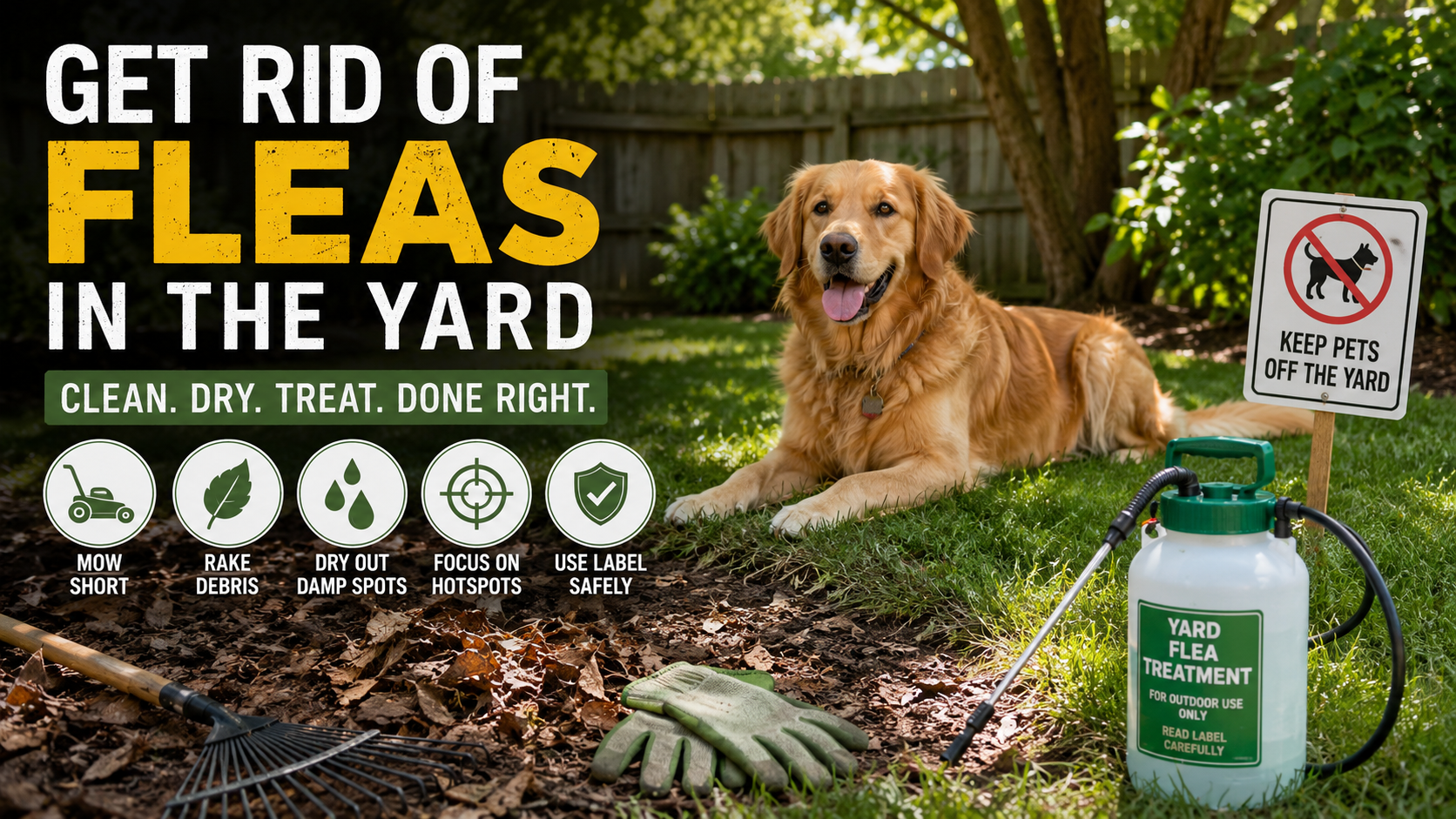
Fleas in the yard usually start with pets, shade, and damp spots. To get rid of fleas in the yard, keep pets off the area for a few days, mow short, rake up leaf litter, and dry out shady patches before you use any outdoor flea treatment. That simple order works better than spraying first. It helps with yard fleas, and it also cuts down where they hide. If you are wondering how to kill fleas in the yard naturally, how long do fleas live in grass, or can fleas live in mulch and shade, the answer is yes - they can hang on in cool, protected spots for weeks if you leave them alone. The old way still works: clean the yard, then treat the right places at the right time.
Beginner's Quick Start
- Keep pets off the yard for now.
- Mow the grass short and bag the clippings.
- Rake leaves, pine straw, and that damp junk under shrubs.
- Water less often so the ground can dry between uses.
- Target shade, fence lines, and pet resting spots.
- Use EPA-labeled products only where the label allows it.
The Basics: What You Need to Know First
Before you buy anything, think like a flea. Fleas do not spread evenly across a yard. They cluster where pets lie down, where the grass stays tall, and where mulch, porch edges, or shrubs stay cool. Mississippi State Extension explains that yard treatment is often part of a bigger plan that includes the pet and the house, not a stand-alone fix.
That matters because the fastest-looking fix is not always the best one. A heavy spray across the whole lawn may waste money, bother pollinators, and still miss the spots that matter most. The UC Statewide IPM Program notes that larvae are more likely in protected, shady areas than in hot open turf, which is why best yard treatment for fleas and ticks often means targeted treatment, not blanketing everything.
If you want what to spray in yard for fleas, start by checking the label for lawns, ornamentals, and pet use. EPA-labeled products are the safe lane. That is the old-school rule, and it still saves headaches.
How to get rid of fleas in the yard
- Move pets out of the yard first. Keep dogs and cats inside or on a clean patio for several days while you work. If your dog uses a favorite corner by the fence, block that area off too. Sounds simple. It is. This step matters because fresh flea eggs keep dropping where pets rest.
- Mow low, then clean up the debris. Cut grass short, especially around shaded edges, and bag the clippings if the yard is already bad. Rake up leaves, sticks, and old mulch layers. Fleas love cover. A clean surface dries faster and gives you a better shot at outdoor flea treatment.
- Dry out the damp zones. Fix a leaky hose bib, pull back overwatered mulch, and reduce irrigation for a week if the lawn can handle it. Water only in the morning, not late afternoon. My grandfather used to say a wet corner is a welcome mat for pests, and he was right.
- Treat the hotspots, not the whole county. Focus on shady pet paths, under decks, around kennels, and along fence lines. If you need a yard treatment, choose a product labeled for outdoor use and follow the directions exactly. The EPA has clear safety guidance for using flea products around pets, and that guidance applies here too.
- Time the treatment for dry weather. Pick a calm day with no rain in the forecast. Most products work better when they can settle in and stay put. If you spray right before a thunderstorm, you may as well throw your money into the gutter.
For a homeowner-safe plan, this order is hard to beat: exclude pets, dry the yard, mow it, then treat. That sequence answers how to treat yard for fleas with pets without turning your Saturday into a chemistry project.
Building Confidence: Your Second Week
By the second week, you should see fewer bites and less flea activity in the same spots. If you still notice hopping pests near the patio, repeat the cleanup before you reach for more product. The problem may be in shade, mulch, or the dog bed, not the center of the lawn. And yes, fleas can live in mulch and shade long enough to keep the cycle going if you skip those places.
This is also a good time to tighten your pet routine. Use a veterinarian-approved flea control on the pet itself, because yard work alone will not stop re-infestation. EPA guidance backs careful product selection for pets, and that is part of the bigger system. If you want, you can explore more Backyard, Lawn, & Home Organization Systems tips while you build a longer-term plan for the yard.
For many homes, a simple hose-end sprayer costs about $15 to $30, while ready-to-use yard sprays often run $20 to $50. A reusable pump sprayer may cost $25 to $60. Honestly, the basic $15 model handles most two-car yards just fine if you are only spot-treating edges and shade.
Common Beginner Stumbles
- Spraying the whole lawn first. That wastes product and misses the real hiding places. Start with the pet zone, then work outward only if needed.
- Leaving the pets in place. If your dog or cat keeps using the same shaded spot, new eggs and larvae keep showing up. Give them a clean break from the area.
- Watering right after treatment. A heavy watering can wash away the product before it does its job. Wait for the label's timing window.
- Ignoring mulch beds. Can fleas live in grass and mulch? Yes, especially where the mulch stays cool and damp. Rake and thin it if it looks soggy.
- Choosing a product that is not labeled for yards. Indoor-only sprays are not the same thing. Read the label. Every time.
One more practical note: if you have bees working a flowering bed, use extra care near blooms. Oregon State Extension has good yard guidance on protecting pollinators while managing fleas, and that matters in suburban lots with coneflowers, clover, or a vegetable patch nearby.
Where to Go Next
- Wash pet bedding in hot water and dry it fully.
- Vacuum indoor rooms where pets nap, especially near doors.
- Keep mowing on a regular schedule through spring and early fall.
- Trim shrubs so air can move through the shaded spots.
- Watch the yard after rain. Warm, wet weeks in July and August can bring fleas back fast.
- Call a licensed pest professional if the infestation is heavy, keeps returning, or spreads across the whole property.
If you live where summers run muggy - think Gulf Coast, parts of Georgia, or a shady lot in New Jersey - you may need a second treatment window. In dry western areas, the pressure can be lighter, but pet traffic still keeps the cycle alive. The fix is the same: dry, mow, target, repeat only where needed.
FAQ
What kills fleas outside fast?
Direct contact with an outdoor flea treatment labeled for yards can kill fleas outside fast. It works best on the hot spots where they hide, such as shade, mulch, and pet-rest areas. Cleanup still matters, because treatment alone does not remove eggs and larvae already in the grass.
What yard treatment is safe around pets?
EPA-labeled yard products used exactly as directed are the safest route around pets. Keep animals off the treated area until the label says they can return. If you are unsure, ask your vet or a licensed pest pro before you apply anything.
Can fleas live in grass and mulch?
Yes, fleas can live in grass and mulch, especially where the ground stays cool and damp. They usually do better in shaded, protected spots than in hot open sun. That is why mowing, raking, and drying the yard are part of the fix.
Start with the pet exclusion step this weekend, then mow and dry the worst shade patches before you buy a bottle. That one change will save time, money, and a lot of scratching.
Comments
Post a Comment
💡 You don't need an account! Select "Name/URL" or "Anonymous" from the dropdown to post.