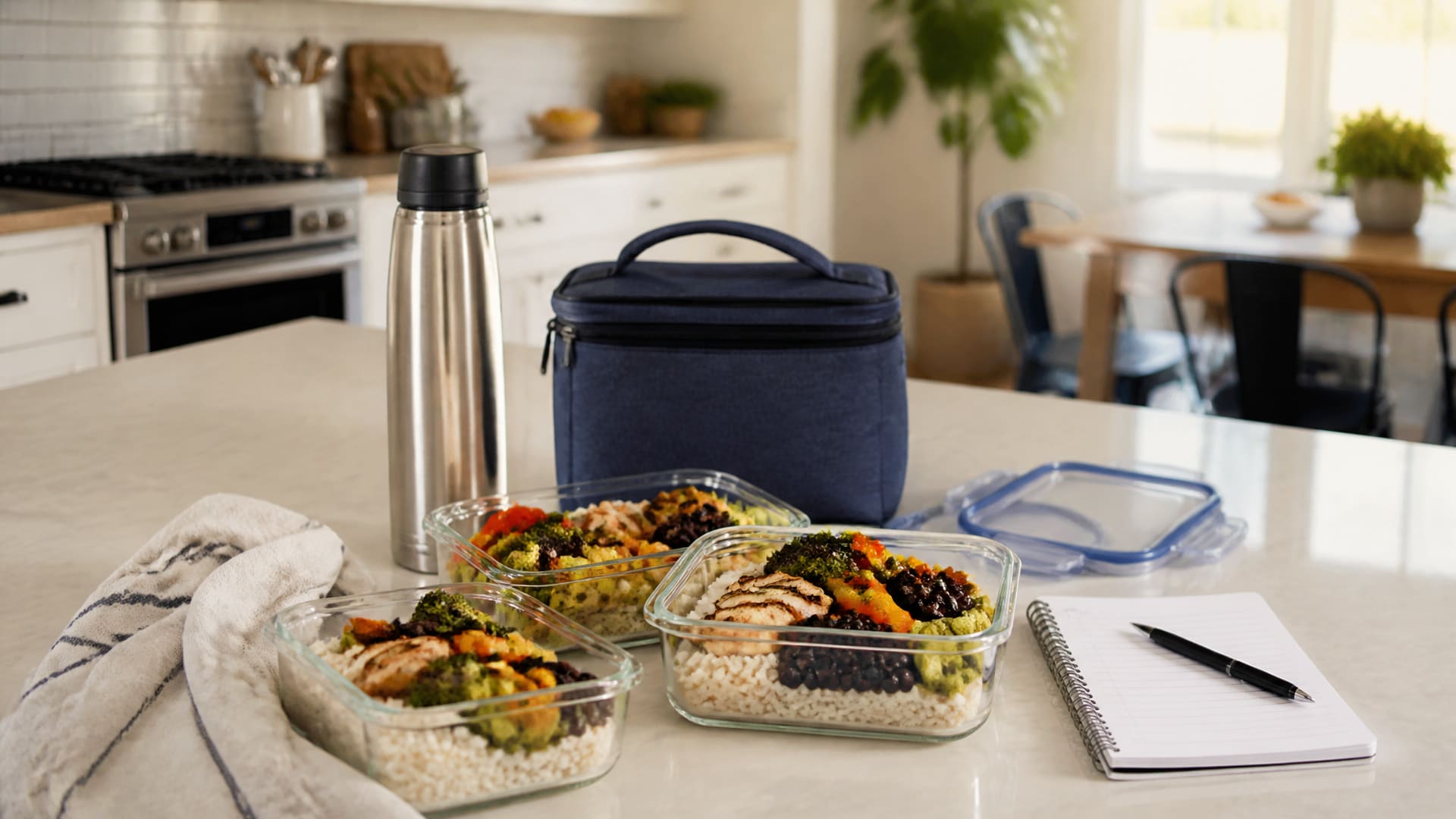
The most effective cheap high-protein lunches for work rely on a simple 3-part framework: one low-cost protein (canned tuna, rotisserie chicken, eggs, cottage cheese, beans, or ground turkey), one complex carbohydrate (brown rice, whole-wheat pasta, or tortillas), and one fibrous vegetable. Batch-prepping 4 to 5 portions on Sunday brings meal costs down to $3 to $5 per serving while delivering 20–35 grams of protein per meal that reheats cleanly in standard office microwaves.
If you want cheap high-protein lunches for work, build them around one low-cost protein, one filling carb, and one vegetable, then cook four or five portions at once. Think rotisserie chicken, eggs, tuna, beans, cottage cheese, Greek yogurt, or ground turkey. That mix gives you protein lunches that hold you through the afternoon, work lunches that reheat well, and cheap lunch ideas that cost a lot less than takeout. A lot of adults can land near $3 to $5 per lunch with a little budget lunch meal prep for adults, especially if you plan around healthy lunch ideas under 5 dollars and easy lunch boxes with protein.
Case Snapshot
- One Sunday prep session under 45 minutes.
- Four work lunches crafted for approximately $18 to $22 total.
- Built using store-brand staples from discount retailers like Aldi, Walmart, or Kroger.
- Evenly warming meals that reheat fully in 2 to 3 minutes without drying out.
- Significant weekly savings by eliminating weekday deli and takeout trips.
That is the short answer. If you only have 15 minutes, start with eggs, beans, canned tuna, or a rotisserie chicken and build from there.
The Situation: The Midday Takeout Trap
Picture a normal Tuesday in a busy American house. You are packing a lunch before school pickup, the dishwasher is still full, and dinner is not even planned yet. You want something cheap, filling, and fast, but the office vending machine and the sandwich shop across the street keep winning.
This is where cheap high protein lunch ideas for work save the week. You do not need fancy meal prep containers or a giant prep day. You need a few repeatable protein meals, a grocery list that does not wander, and food that tastes fine after a microwave turn. The USDA MyPlate guidance on budget shopping emphasizes building meals around stable, repetitive pantry staples rather than elaborate recipes (USDA MyPlate: Healthy Eating on a Budget).
The goal is not perfect eating. It is a lunch that keeps you full until dinner, costs less than $8 from a takeout counter, and does not turn soggy by noon. Sounds simple. It is.
The Problem: Lunch Inflation and Mid-Afternoon Crashes
The expensive part is usually not the protein itself. It is the lack of a plan. You grab a deli wrap for $11, add chips and a drink, and suddenly lunch is eating a chunk of your weeknight grocery money.
Another problem is boredom. If you make the same dry chicken breast every day, you will stop eating your lunch by Wednesday. If you skip protein, you may get hungry again by 2 p.m. The CDC recommends building meals around protein foods and planning meals ahead so snacks and meals actually satisfy you (CDC: How to Have Healthier Meals and Snacks).
Then there is safety. Tuna salad sitting in a warm car is not lunch prep. If your lunch has mayo, dairy, meat, or eggs, it needs cold storage until you eat it. Food safety specialists at the University of Nebraska-Lincoln highlight the necessity of insulated bags paired with frozen gel packs to keep perishables under 40°F until consumption (UNL Extension: Packed Lunch Safety Guidelines). That matters in Phoenix heat, Florida humidity, or a parked car in July anywhere.
What We Tried: The Minimalist Prep Method
- We picked one protein for the week: One Sunday afternoon, we bought a rotisserie chicken, a dozen eggs, two cans of tuna, one block of cheddar, and a tub of plain Greek yogurt. That covered breakfast and lunch without a second store run. Store-brand beans and frozen edamame were there too, because cheap lunch ideas need backup.
- We built lunches around repeatable parts: A $1.25 cup of rice, half a cup of black beans, and chicken made a bowl. Eggs and cheese became a wrap. Tuna mixed with Greek yogurt, celery, and mustard became a sandwich. The point was not fancy. It was predictable.
- We cooked in batches, not marathons: The chicken got shredded in about 10 minutes. Rice went in a basic rice cooker. Frozen broccoli and carrots went on a sheet pan with olive oil and salt. Batch cooking unified staples across separate recipes follows MyPlate's Efficient Eats planning model, eliminating waste and keeping food prep manageable (USDA MyPlate: Efficient Eats Meal Prep Guide (PDF)).
- We packed for the real workday: Microwave-safe containers made reheating easy. The cold lunches went in an insulated bag with two ice packs. The hot lunches were portioned in 2-cup containers so they warmed evenly. No mystery sauce on the office shirt. That alone was worth it.
We also kept one emergency lunch at work. Shelf-stable tuna pouches, whole-grain crackers, and peanut butter pretzels are not glamorous, but they save you from the $14 salad bar. Honestly, that backup box has rescued more Mondays than I can count.
What Actually Worked
The best affordable lunch meal prep was the boring stuff. Chicken rice bowls, tuna pasta salad with peas, turkey chili, and egg fried rice all reheated well and stayed filling. Each one had at least 20 grams of protein once portioned normally, and none required a special grocery run.
What really cut costs was buying ingredients that crossed over. A rotisserie chicken became wraps on Monday and quesadillas on Wednesday. Plain Greek yogurt worked as a dip, a sandwich binder, and a breakfast topping. Beans filled out bowls without making them taste like diet food. That is the whole trick.
If you are trying to stop buying expensive takeout for lunch, start with a hard rule: no lunch purchase unless your fridge is empty. That sounds strict. It is. But it breaks the habit fast. A $32 lunch tab for one workweek adds up before you even notice.
Lessons You Can Use for Workday Lunches
- Buy proteins you enjoy: If you hate canned tuna or boiled eggs, do not force them into your rotation. Pick 1–2 base proteins you look forward to eating.
- Shop with a strict list: Wandering the grocery aisles without a plan leads to impulse buys and food waste.
- Focus on interchangeable staples: Rice, black beans, shredded poultry, Greek yogurt, and frozen mixed vegetables cover dozens of distinct combinations.
- Select microwave-tolerant meals: Fried rice dishes, stews, chilis, and grain bowls reheat evenly, whereas delicate leafy greens or cream sauces degrade quickly.
- Maintain cold chain integrity: Insulated lunch bags and two ice packs prevent foodborne illnesses during daily commutes.
- Stock an office desk stash: Keep shelf-stable emergency meals at your workstation to prevent expensive panic orders.
If you want more planning help, explore more Practical Meal Prep & Budget Grocery Planning tips. It is easier to stay on budget when you already have a system.
Frequently Asked Questions
What are cheap high-protein lunches for work?
Cheap high-protein lunches for work are meals built from low-cost protein foods like eggs, beans, tuna, chicken, cottage cheese, or Greek yogurt. Good examples include chicken rice bowls, tuna pasta salad, turkey chili, bean burritos, and egg salad wraps. These are make-ahead meals that deliver 20–35g of protein per serving while costing under $4 to make.
How do I meal prep lunches on a budget?
You meal prep lunches on a budget by planning around store-brand sales, cooking proteins in bulk, and buying versatile ingredients that cross over multiple meals. Batch-cook base carbs like rice or pasta, roast frozen vegetables, and rotate store-bought rotisserie chicken or canned beans to avoid meal burnout.
What lunch ideas keep me full until dinner?
Lunch ideas that sustain satiety combine high-quality protein (at least 20–30 grams), dietary fiber (from legumes, oats, or vegetables), and healthy fats (such as olive oil, cheese, or nuts). Balanced combinations like turkey black-bean chili, chicken quinoa bowls, or Greek yogurt parfaits prevent mid-afternoon energy crashes.
How can I stop buying expensive takeout for lunch?
To eliminate daily takeout expenses, keep an emergency food kit at work containing shelf-stable tuna packets, whole-wheat crackers, nuts, or microwaveable bean pouches. Having a pre-portioned meal ready in the office fridge eliminates the temptation of quick-service dining when work gets hectic.
Comments
Post a Comment
💡 You don't need an account! Select "Name/URL" or "Anonymous" from the dropdown to post.