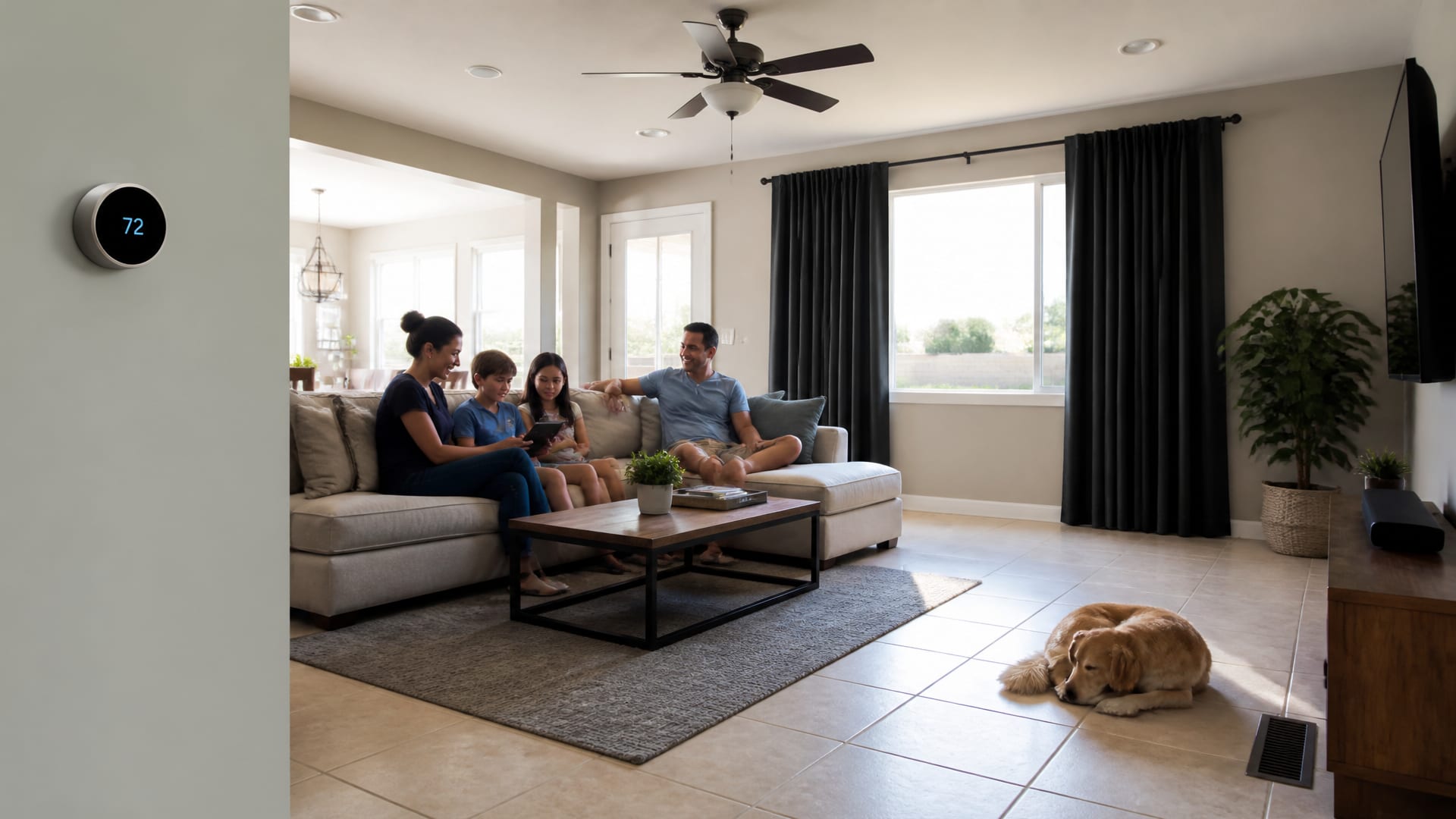
If you want to know how to lower electric bill in summer effectively, the fastest route is pairing smart thermostat control with improved airflow. Set your thermostat to 78°F when home, block midday sun with blinds, and run ceiling fans in occupied rooms to feel several degrees cooler. Moving heat-generating appliance use (like laundry and baking) to early morning or late evening further helps to reduce summer electric bill costs without making your home miserable.
July heat can make your summer utility bill jump fast, even if you never turn the AC off. The trick is not suffering through warm rooms. It is using the cooling you already pay for more intelligently. If you want to know how to lower electric bill in summer, focus on thermostat habits, airflow, shade, and appliance timing. That is how you reduce summer electric bill without sweating, especially if you also want to know what should I set my thermostat to save money and how to cut AC costs during a heat wave.
For most homes, the smartest move is to raise the thermostat a few degrees, run ceiling fans to help people feel cooler, close blinds on sun-facing windows, and push heat-making chores to early morning or late evening. Clean filters, a tuned thermostat, and a few room-by-room habits can provide necessary lower AC bill relief without making your house miserable.
Before -> After: Optimized Cooling Setup
- Before: The thermostat gets touched ten times a day. After: You set one target temperature and let it ride.
- Before: Blinds stay open on the sunny side. After: You block external heat gain before it enters.
- Before: Dryer, oven, and dishwasher all run at 6 p.m. After: You spread heat-making chores out.
- Before: Ceiling fans and AC fight each other. After: They work as a complementary cooling pair.
- Before: Air filter is gray and dusty. After: Airflow is unrestricted, requiring less system work.
Before: The Messy Status Quo
On a hot weekday, the usual setup is simple: the AC runs hard, the house still feels sticky, and the summer electric bill shows it. You open a window for a minute, then shut it. The thermostat bounces up and down. The dryer runs after dinner because that's when you remember the laundry. Sound familiar? It happens in Phoenix, Atlanta, Houston, Tampa, and plenty of places that get a long stretch of humid weather.
The problem is not one giant mistake. It is a pile of small, unaddressed items.
- Sun pours through south- and west-facing windows all afternoon, increasing cooling load.
- The thermostat is set lower than you really need, so the AC cycles constantly to maintain an unsustainable temperature.
- Ceiling fans sit still, even though they cost far less to run than central cooling.
- Oven, dishwasher, and dryer use pile onto the hottest part of the day, heating the indoors when the system is already stressed.
- Air filters get ignored until airflow feels weak and the system struggles to breathe.
- Pet water bowls sit in warm rooms, so you keep the whole house cooler than necessary for a dog or cat's comfort.
That setup drains money and comfort at the same time. The U.S. Department of Energy (DOE) confirms that proper insulation, air sealing, and consistent thermostat settings reduce heating and cooling use (DOE: Spring and Summer Energy Saving Tips). ENERGY STAR emphasizes cleaner filters, shade, and efficient cooling habits (ENERGY STAR Central AC Cooling Season Tips). Those are the basic home engineering parts that save cash.
What should I set my thermostat to save money?
A good starting point for the best thermostat setting for summer is 78°F when you're home and comfortable, then a few degrees warmer when you are asleep or away, if your household can tolerate it carefully (DOE: Thermostats Guide). This is a common best summer thermostat setting to save money because it balances significant AC cost savings with livable indoor comfort. If you have pets, older family members, or health issues, adjust carefully and never make the house unsafe.
A smart thermostat makes this easier. You can set it and forget it, then let it step up a little when nobody is home and cool back down before you return from school pickup or a Saturday grocery run. That small automation helps enormously in Texas heat, Midwest humidity, and those sticky East Coast nights that never seem to quit.
One key takeaway: The definitive answer to what should I set my thermostat to save money is the highest temperature you can keep steady without constant fiddling.
The Turning Point
The switch happens when you stop treating cooling like one big problem and start treating it like a system. Air leaks, sunlight, fan use, appliance heat, and thermostat control all connect. Once you connect these two—comfort and control—your summer electric bill gets easier to manage.
Honestly, I prefer simple tools over expensive fixes. A $15 box fan, a $25 blackout curtain set, and a clean $8 HVAC filter can do more to cut AC costs during a heat wave than a flashy gadget you never program. Sounds excessive? It isn't. In many homes, the easy wins are the ones that stick.
After: The Working Setup
After a few small changes, the house feels calmer. The AC still runs. It just runs with less drama. The goal is not to freeze the place. The goal is to reduce waste while keeping your family, guests, and pets comfortable.
- You close blackout curtains or blinds on the sunniest windows by late morning to block external heat.
- You use ceiling fans in occupied rooms so the air feels cooler at a slightly higher thermostat setting.
- You run the dishwasher, dryer, and oven outside the 4 p.m. to 8 p.m. heat peak when possible.
- You keep vents open and clear, including the ones near dog beds, cribs, and favorite couch spots.
- You change HVAC filters on schedule, often every 1 to 3 months depending on dust, pets, and runtime.
- You use a portable dehumidifier in muggy rooms if humidity, not temperature, is the main problem.
That last one matters more than people think. A room that is damp feels hotter than a dry one at the same temperature. If you live in Florida, Louisiana, coastal Georgia, or a basement apartment in Illinois, removing moisture can make a huge difference in comfort without pushing your thermostat lower.
What Changed and Why It Worked
The savings came from timing and airflow, not discomfort. That is the whole trick. What uses the most electricity in hot weather is air conditioning, followed by other heat-making appliances that force the AC to work harder.
- Sun control reduced heat gain before it hit the room. East and west windows are usually the biggest offenders.
- Fan pairing let people feel cooler at a slightly higher thermostat setting. Fans cool people, not rooms, which is exactly why they help.
- Smart scheduling moved laundry and cooking to cooler hours. That lowered indoor heat during the afternoon peak.
- Filter care helped the system move air more easily. A clogged filter makes the blower and compressor work harder.
- Dehumidifying fixed the sticky feeling without overcooling the whole house.
Pet care fits into this too. If your dog likes to nap by the vent or your cat camps on tile in the kitchen, you do not need to blast the whole house like a meat locker. You need stable, even cooling and good airflow. For more practical household advice that respects pets and real-life routines, explore more Pet Care, Health & Responsible Household Ownership tips.
How to Replicate It: Step-by-Step Lower Electric Bill Plan
- Set one summer target temperature. Pick a starting thermostat setting, like 78°F when home, and leave it alone for a few days to establish a baseline. If you have a smart thermostat, schedule a small bump up when you are asleep or out, then let it cool back down before wake-up or arrival.
- Block external heat gain. Close blinds, shades, or blackout curtains on the sun side by late morning. In a ranch house or apartment, this can matter more than another degree on the thermostat.
- Use fans on purpose. Run ceiling fans only in rooms you occupy. If you have a box fan or tower fan, aim it at the room where people sit, not the ceiling. Turn it off when you leave. Fans are cheap comfort tools that support a lower electric bill effort.
- Shift heat-making tasks. Run the dishwasher after 8 p.m., dry clothes early in the morning, and use the oven less during the hottest hours. A toaster oven, microwave, or outdoor grill can cut indoor heat on brutal July days.
- Check the filter and vents. Replace or clean the HVAC filter on a regular schedule (often every 3 months), and make sure furniture, pet crates, and rugs are not blocking vents or returns. If airflow still feels weak, call a licensed HVAC technician.
FAQ
How can I lower my electric bill in summer?
Focus on reducing waste, not cooling itself. Raise the thermostat a few degrees, close blinds during the hottest part of the day, run fans in occupied rooms, and shift oven, dryer, and dishwasher use away from afternoon peak heat. These changes lower the AC's workload and usually make the bill easier to handle.
What should I set my thermostat to save money?
The U.S. Department of Energy suggests 78°F (26°C) as an initial target setting when home and awake (Energy.gov). When you are asleep or away, setting it a few degrees warmer (e.g., 82°F) maximizes savings carefully if health allows.
What uses the most electricity in hot weather?
Air conditioning usually uses the most electricity in hot weather, often accounting for 50% or more of your summer electric bill. Appliances that add significant heat—like ovens, clothes dryers, and dishwashers—can force the AC to run longer, further increasing costs.
How do I cut AC costs without making my home miserable?
Keep the temperature steady, use fans where people actually sit, and block sunlight before it warms the room. A smart thermostat helps by automating the boring part. If the home still feels sticky, a dehumidifier can help more than cranking the AC lower.
Start with one change tonight: close the west-facing blinds before dinner and set a single thermostat target for the rest of the week. That small move is usually enough to show you where the real savings are hiding.
Comments
Post a Comment
💡 You don't need an account! Select "Name/URL" or "Anonymous" from the dropdown to post.