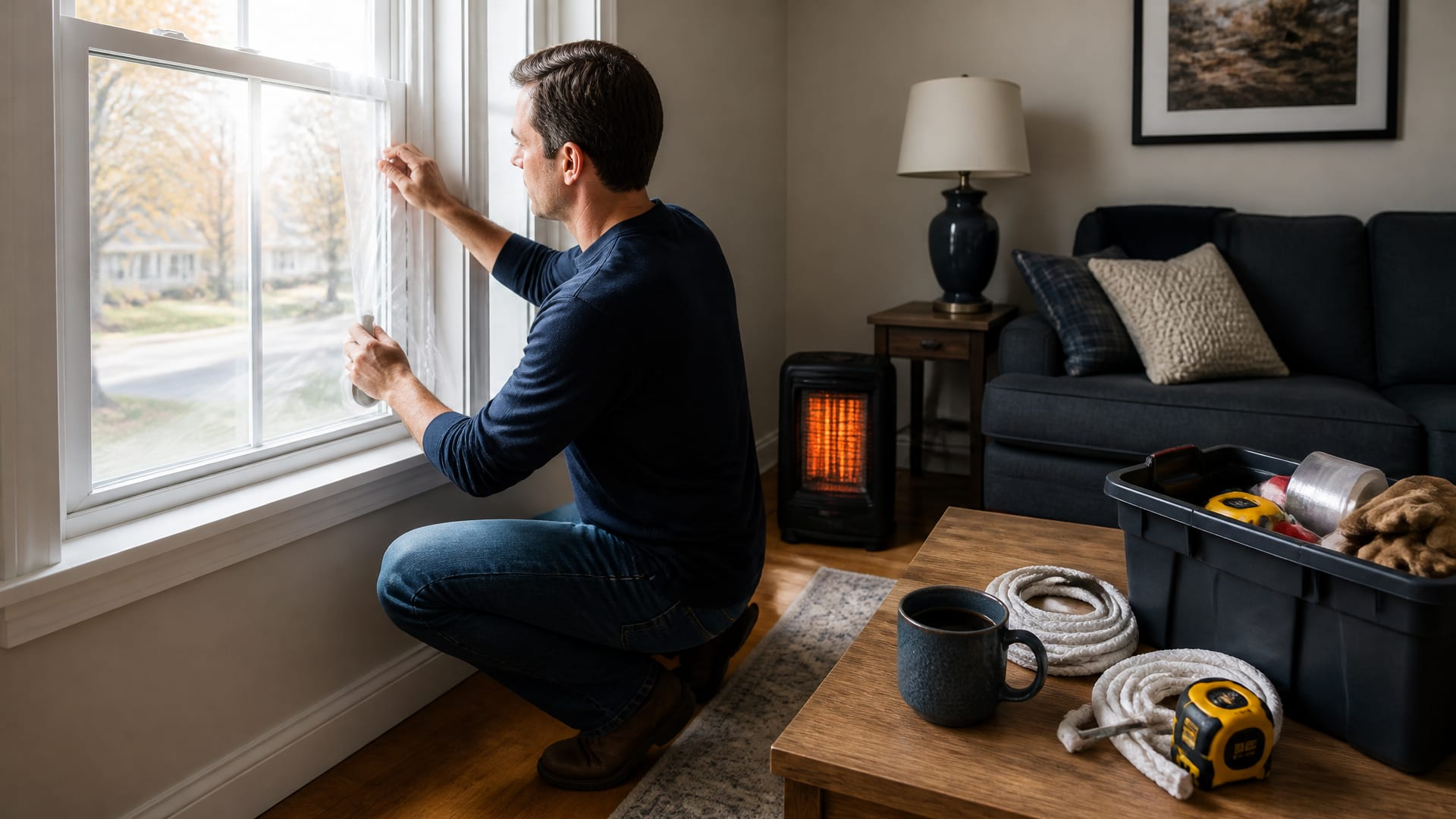
The first cold snap usually showed me the problem fast. A window that felt fine in September could turn into a little wind tunnel by October, and the chill would sneak across the room before breakfast. If you're trying to figure out how to seal a drafty window, the fix usually starts with weatherstripping, rope caulk, shrink film, or a temporary seal that matches your window type and your lease.
I learned the hard way that not every drafty window needs the same answer. A loose sash, a cracked seal, and a gap around the frame each call for a different move, and the cheapest way to seal windows for winter is often the one that fits the problem instead of the biggest fix on the shelf. If you're a renter wondering about a temporary window seal for renters, or if you want to know how to stop cold air coming through windows without making a mess, the steps below will get you there.
How do you seal a drafty window?
Start by finding where the air is coming in, then choose the lightest fix that can close that gap. For many homes, weatherstripping seals moving parts, rope caulk fills small cracks, and shrink film blocks the whole pane for winter. If the draft comes from around the frame, not the sash, the repair may need caulk or a pro.
Quick Answer
To seal a drafty window, find the leak, clean the surface, then use weatherstripping on moving parts, rope caulk for small gaps, or shrink film for a temporary winter seal. If the gap is around the frame or the window is rotted, you may need caulk, backer rod, or a contractor.
What is the cheapest way to seal windows for winter?
I have a soft spot for rope caulk because it costs little, installs fast, and peels off later without drama. For a lot of renters, that made it the best first buy. A small package often runs about $6 to $12, weatherstripping ranges from about $5 to $20 per roll, and a shrink-film kit often lands around $15 to $25 for a few windows.
The lesson was simple. Cheap does not mean random. If the sash still moves but leaks air, weatherstripping usually wins. If the gap is tiny and uneven, rope caulk can bridge it. If the whole window feels cold, shrink film makes a bigger difference because it adds a trapped air layer, which helps home insulation.
How the common fixes compare
| Method | Best for | Typical cost | Renter friendly? |
|---|---|---|---|
| Weatherstripping | Moving sashes and operable windows | $5-$20 | Usually yes |
| Rope caulk | Small gaps around trim or frame | $6-$12 | Yes |
| Shrink film | Whole-window draft blocking | $15-$25 | Yes, if installed carefully |
| Caulk/backer rod | Frame gaps and larger cracks | $8-$25 | Usually no for permanent caulk |
Quick tip: If you only want one starter kit, buy rope caulk, a roll of weatherstripping, a utility knife, and a shrink-film kit. That combo handles most fall and winter draft jobs in apartments, row houses, and older suburban homes.
How to fix a drafty window step by step
The first time I chased a draft, I skipped the detective work and started taping things at random. What happened next was a mess of peeling strips and a window that still whistled. A better plan was to test first, then seal the right spot.
- Close the window and feel for cold air with your hand.
- Run a lit incense stick or a thin tissue near the edges to spot movement.
- Check the sash, the meeting rail, the trim, and the frame one by one.
- Clean dust and old adhesive with mild soap and dry the area.
- Apply weatherstripping to moving parts where the window opens and closes.
- Press rope caulk into small cracks that you may want to remove later.
- Use shrink film over the whole window if the pane itself feels icy.
- Test the window again after the first windy night.
Try this: Do the test on a windy evening, or before your furnace kicks on in the morning. The draft usually shows itself faster then, and you will waste less time sealing the wrong edge.
Weatherstripping for drafty windows steps
Weatherstripping works best on parts that move. I like adhesive foam tape for light-duty jobs, vinyl or silicone for longer wear, and V-strip for old double-hung windows that close with a little wobble. The EPA's ENERGY STAR home-sealing guide points to weatherstripping as a standard way to reduce drafts and improve winter comfort.
- Measure the contact points, not the whole window.
- Cut each strip a little long.
- Stick it to a clean, dry surface.
- Close the window slowly so the seal compresses.
If the window is painted shut or swollen from humidity, don't force the sash. That's a different problem. A stubborn window may need a carpenter or a landlord repair before any seal will hold.
Does window film really help with drafts?
Yes, window film can help a lot, especially on older single-pane windows. Shrink film adds a thin air layer, and that buffer cuts the chill you feel near the glass. It will not fix rotten frames or big structural gaps, but it can make a living room, nursery, or upstairs bedroom feel calmer fast.
I used it one January in a Michigan rental, and the room stopped feeling like a porch. The film kit was not fancy. It was just clear plastic, double-sided tape, and a hair dryer. Still, the difference was obvious by bedtime.
How to use shrink film on windows
- Clean the frame and let it dry.
- Apply the tape around the interior window trim.
- Stick the plastic over the opening with a little slack.
- Use a hair dryer to shrink it tight.
- Trim extra film with scissors or a utility knife.
Sounds excessive? It isn't. On drafty old windows, film is often the fastest renter friendly fix because it removes easily at the end of the season, especially in apartments with strict lease rules.
Important Note
Do not use spray foam on a window gap unless you know it is a low-expansion product made for windows and doors. Regular foam can push parts out of place. The Department of Energy says backer rod, caulk, and low-expansion foam are the right materials for certain air-sealing jobs around openings.
When rope caulk, caulk, or backer rod makes more sense
I reached for rope caulk when I wanted something removable and forgiving. It looked a little old-school, but it did the job on a gap between the trim and the wall, and I could pull it off without scraping paint later. For temporary winter sealing, that mattered more than a perfect finish.
Permanent caulk works better on stationary cracks around the exterior or interior frame, but it is not the best choice if you are renting and expect to move soon. Backer rod, which is a foam rope you press into a wider gap before caulking, helps fill deeper spaces so the caulk does not sink in. The DOE and Building Science Education both point to caulk, backer rod, and low-expansion foam for proper air sealing around window openings.
Use this rule of thumb
- Moving part - weatherstripping.
- Small removable gap - rope caulk.
- Whole pane feels cold - shrink film.
- Frame crack or larger opening - caulk, backer rod, or a pro.
Safety note: If you see rot, mold, water stains, or a gap big enough to see daylight through, stop treating it like a simple draft. Water and air leaks often travel together, and a handyman, window pro, or landlord may need to inspect the frame.
How can renters fix drafty windows without damaging them?
Renters usually need the least messy answer, and I get that. Nobody wants an apartment deposit fight over tape residue or chipped paint. The good news is that weatherstripping, rope caulk, and shrink film are all common temporary window seal for renters options when you need a seasonal fix.
The Department of Energy's renter tips recommend low-cost air sealing approaches like weatherstripping and removable sealants for reducing heat loss without major changes. That matches real life in places like Chicago, Minneapolis, Denver, and the Northeast, where the first cold week can make every window complaint obvious.
Renter-safe shortlist
- Removable adhesive weatherstripping
- Rope caulk for tiny cracks
- Shrink film on interior glass
- Draft stoppers at the sill
If your lease forbids any adhesive at all, use tension rods with plastic film or ask your landlord for permission before changing the trim. A short text and a photo often solves the problem faster than a long back-and-forth.
How to tell if a window seal is failing
One winter morning, I noticed a line of dust on the sill and a cold strip near the frame. That was the clue. A failing window seal often shows up as a draft, fog between panes, peeling caulk, or a sash that rattles when the wind hits.
If your window has double panes and fog is trapped between the panes, the insulated glass seal may be broken. Weatherstripping will not fix that, because the problem is inside the glass unit. In that case, you may need glass replacement or a full sash swap.
- Cold air near the edge suggests a frame or sash gap.
- Condensation between panes suggests seal failure inside the glass unit.
- Rattling suggests loose sash fit or worn stops.
- Cracked caulk suggests the frame needs fresh sealing.
Frequently Asked Questions
How do I stop cold air coming through windows fast?
Use shrink film or rope caulk first. Both are quick, cheap, and easy to remove later. If the sash is loose, add weatherstripping after you find the leak path.
What is the cheapest fix for one drafty window?
Rope caulk is usually the cheapest targeted fix. It is good for small, odd-shaped gaps and does not need special tools beyond clean hands and scissors.
Can I use duct tape on a drafty window?
No, duct tape is a poor choice for this job. It leaves sticky residue, ages badly, and often peels paint when you remove it.
Does window film really help with drafts?
Yes, it helps a lot on single-pane or older windows. It does not repair the window, but it blocks a surprising amount of cold air feeling by adding an insulating air space.
How long does shrink film last?
Most seasonal kits last through winter if you install them on a clean, dry frame. Heavy use, pets, or repeated bumps can shorten that, so hall windows and kid-height windows may need more care.
Should I seal the inside or outside of the window?
Start inside for temporary fixes and renter-friendly work. Exterior sealing is better for permanent repairs, but it is harder to do right and usually makes more sense for homeowners or professionals.
When should I call a pro?
Call a pro if the frame is rotten, the glass seal has failed, or you see major water damage. Those are not simple draft jobs anymore.
Final Takeaway
If you only do one thing this weekend, start with the cheapest test: feel the edges, find the leak, and match the fix to the spot. Weatherstripping handles moving parts, rope caulk fills small cracks, and shrink film is the fastest cold-weather shield for a whole pane.
For most households, that means a $15 to $30 shopping trip can make one room feel better before the next cold front. If the problem is bigger than a gap and keeps coming back after you seal it, the frame or the glass may be failing, and that is the moment to call your landlord or a window pro.
For more seasonal projects that pair well with this one, explore more US Home Maintenance & Seasonal Care tips.
Editorial Note: This article is for general home-maintenance guidance only. Product fit and repair needs can vary by window type, lease terms, and local weather.
Comments
Post a Comment
💡 You don't need an account! Select "Name/URL" or "Anonymous" from the dropdown to post.