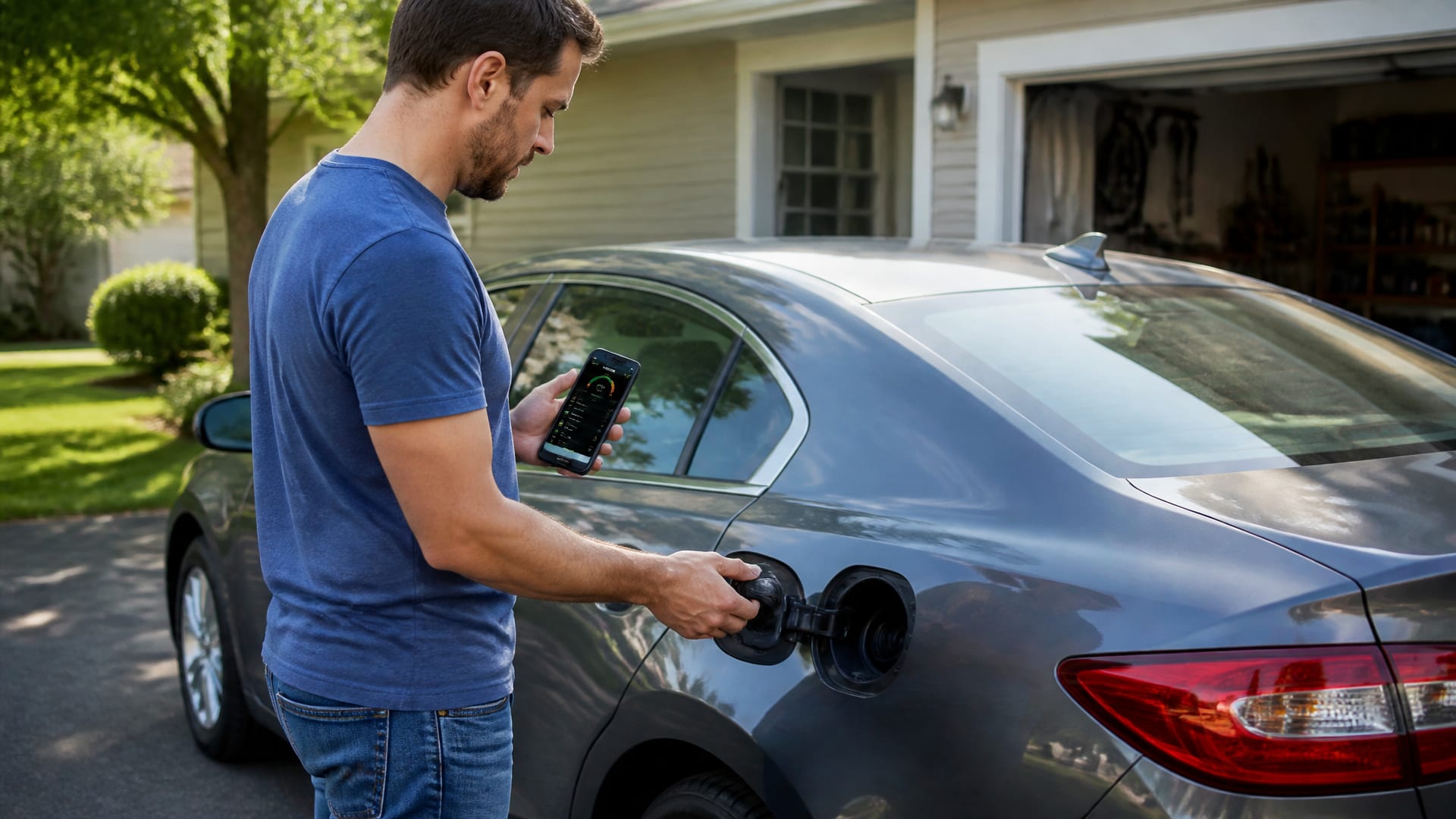
You noticed the check engine light on but car runs fine, and now you want the practical answer: can it wait, or does it need attention today? Most steady lights point to a problem that is not an immediate breakdown, but it still needs a basic check. If the car runs normal but the check engine light came on, start with the gas cap, watch for new symptoms, and read the code if you can. That is the fastest way to tell whether this is a small emissions issue or a repair that should not wait.
30-Second Answer
If the light is steady and the car drives normally, you can usually drive a short distance while you check the gas cap, listen for odd sounds, and scan the code. If the light is flashing, the engine shakes, power drops, or the car smells like fuel, stop driving and get help right away. A steady light is a warning, not a guarantee of danger.
Quick Reference Table
- Steady check engine light: Usually means a stored fault, often emissions-related. The EPA and NHTSA both note that a car may still run normally even with the light on.
- Blinking check engine light: Treat this like a serious warning. A flashing light can mean a misfire that may damage the catalytic converter, which is the exhaust part that cleans dirty gases.
- First thing to check: Tighten the gas cap until it clicks. A loose cap is one of the simplest causes, and it often turns on after a fill-up on a cold night in Minnesota or a hot July afternoon in Arizona.
- Best first tool: An OBD2 scanner, either a handheld unit or a phone-connected Bluetooth model from brands like BlueDriver, Ancel, or Innova. Honestly, the basic $15 model handles most two-car garages.
- Typical scan cost: Many auto parts stores will read the code for free, while a shop diagnosis might run about $80 to $150. If the fix is a gas cap, you may spend $12 to $25.
- Common bigger repairs: An ignition coil can be around $120 to $350 installed, while some oxygen sensor jobs can land near $150 to $450 depending on the car.
- Safe to wait: If the light is steady, there are no odd noises, and the car feels normal on a short errand run, you can usually wait for a planned repair window.
- Do not wait: If the light flashes, the engine runs rough, or the car stalls, that moves from dashboard light diagnosis to tow-or-repair territory fast.
The trick is to separate nuisance alerts from real damage. A steady light often points to an emissions issue, a loose gas cap, or a sensor that sent a bad reading. That does not mean ignore it for weeks. It means you can use a calm, ordered check instead of guessing.
Can I drive with a steady check engine light?
Usually, yes for a short period, if the light is steady and the car feels normal. The EPA says a vehicle may still drive normally when the light comes on, and NHTSA notes that some causes are simple, like a loose gas cap or poor fuel. Still, a steady light means the car has stored a fault code, so treat it like a warning that needs a plan, not a badge of honor.
Think of it like a smoke alarm that chirps once. You do not ignore the batteries forever. You check the cause, then schedule the fix. If you need to commute across town, make a school pickup, or run one Saturday errand, a brief drive is often fine while you sort it out. Long road trips are a different story.
- Pull over safely and check the basics. Park, turn the car off, and tighten the gas cap until it clicks. If you just fueled up, this is the first move. The EPA guidance for 1996 and newer cars also starts here.
- Look and listen. Check for shaking, hard starts, strange smells, smoke, or loss of power. Those signs change the situation fast.
- Read the code. Use an OBD2 scanner or stop at an auto parts store that offers a free scan. The code tells you whether you're seeing an evaporative emissions problem, an oxygen sensor issue, or a misfire.
- Decide on timing. If the car is normal and the code points to a minor issue, book repair soon. If the code points to a misfire or fuel problem, shorten the timeline.
A few people try the old trick of disconnecting the battery to clear the light. That can erase useful data and does not fix the fault. I would skip that move. It saves zero time when the problem returns two days later.
Why is my check engine light on if the car runs fine?
Because the engine computer can detect a problem before you feel it. That is actually the system doing its job. Some faults affect emissions first, then drivability later. Others are tiny at idle but get worse under load, like climbing a hill or merging onto I-95.
Common check engine light causes include a loose gas cap, an oxygen sensor problem, a small vacuum leak, an aging spark plug, or an intermittent misfire. NHTSA’s instrument panel guidance also notes that poor fuel quality can trigger the light. None of those always causes rough running right away.
Here is the practical part: if the light came on after a fill-up, start with the cap. If it appeared during cold weather, moisture or a weak coil can be involved. If it shows up after a long highway trip in Texas heat, don’t assume it is nothing just because the car still cruises fine.
When to Act Now
Use this list when you need a fast safety decision. If any of these show up, stop treating the light like a mild inconvenience.
- The check engine light is blinking. That is the big one. EPA guidance warns that a blinking light can mean a misfire that may damage the catalytic converter.
- The engine runs rough. Shaking, stumbling, or bucking means the car is no longer truly running fine.
- You smell fuel or burning. Raw gas smell, hot wiring smell, or visible smoke changes this from simple troubleshooting to a safety issue.
- Power drops suddenly. If the car struggles to accelerate or slips into limp mode, get off the road and call for help.
- The temperature gauge climbs. Overheating is not a wait-and-see problem. Pull over before the damage gets expensive.
In those cases, a tow can be cheaper than pushing a bad car harder. A tow in many US cities may start around $75 to $150 for a short local move, then climb with mileage. That sounds annoying. It is.
Also act fast if the car is flashing the light and you are far from home, like on a winter trip through upstate New York or a summer drive across New Mexico. Keep the trip short. No extra errands.
When to Wait
A steady light with no symptoms often gives you a little breathing room. That does not mean forever. It means you can use a simple workflow and fit the repair into your week instead of blowing up your schedule.
- The car starts, idles, and drives normally. No shaking, no stalls, no weird noises.
- The light stays steady. No blinking, no repeated flashing.
- You just fueled up. Tighten the gas cap first. If the cap was loose, the light may clear after a few drive cycles.
- You have no other warning lights. Oil pressure, battery, and temperature warnings change the equation.
- You can get a code scan within a day or two. Use a local parts store, a Bluetooth OBD2 reader, or your regular mechanic.
If you want this to stay low-effort, automate the boring part. Keep a cheap OBD2 scanner in the glove box next to the registration and insurance card. Then connect the reader to a phone app once and save the last code. That makes the next warning much easier to sort out, especially if your household has more than one car.
For a lot of families, the right move is to wait until a planned stop at the mechanic, especially if the issue looks small. A gas cap, for example, may cost less than a takeout dinner. A new cap on some cars runs about $12 to $25. A sensor or ignition part is more, but still manageable if you catch it early.
If you want more vehicle checklists like this, explore more Vehicle Care & DIY Maintenance Checklist tips.
Tools & Resources
You do not need a full garage to handle the first pass. You just need a small, repeatable setup that saves time on the next warning light.
- OBD2 scanner: A handheld reader or Bluetooth unit. The codes are the fastest path to a real diagnosis.
- Tire gauge and flashlight: Not for the check engine light itself, but useful if you are already doing a quick driveway inspection on a dark morning.
- Gas cap or replacement seal: Cheap, easy, and worth checking before you spend money on a shop visit.
- Owner's manual: Some cars describe the warning lights and the exact reset behavior better than the dashboard does.
- Trusted repair shop: A shop with clear diagnostic pricing beats guessing. Ask whether the scan fee applies to the repair.
- Parts store code readout: AutoZone, O'Reilly, and Advance Auto Parts often offer a free code scan. It is not a repair, but it helps you decide your next move.
One more practical tip: keep notes in your phone. Write the date, the fuel brand if it happened after a fill-up, and any symptoms. That small habit helps a mechanic spot patterns. Sounds excessive? It isn't.
FAQ
What should I check first when the engine light comes on?
Check the gas cap first. A loose cap is one of the simplest causes, and both EPA and NHTSA guidance point to it as a common first step. After that, look for blinking, rough running, or new smells before you decide whether to keep driving.
When is a check engine light an emergency?
A check engine light is an emergency when it flashes, the engine shakes, the car loses power, or you smell fuel or burning. A blinking light can signal a misfire that may hurt the catalytic converter. If the car is overheating or stalling, stop driving and arrange a tow.
Can I ignore the light if my car runs normal?
No, you should not ignore it. A normal drive does not mean the problem is harmless, and the fault code can point to an issue that gets worse over time. You can often wait a short time if the light is steady, but you should still scan the code and plan the fix.
The smartest next step is simple: tighten the gas cap, scan the code, and decide whether this is a one-day nuisance or a tow-call situation. If the light stays steady and the car acts normal, you have time to act like a calm homeowner, not a panicked driver. If it flashes, you stop. Fast.
Comments
Post a Comment
💡 You don't need an account! Select "Name/URL" or "Anonymous" from the dropdown to post.