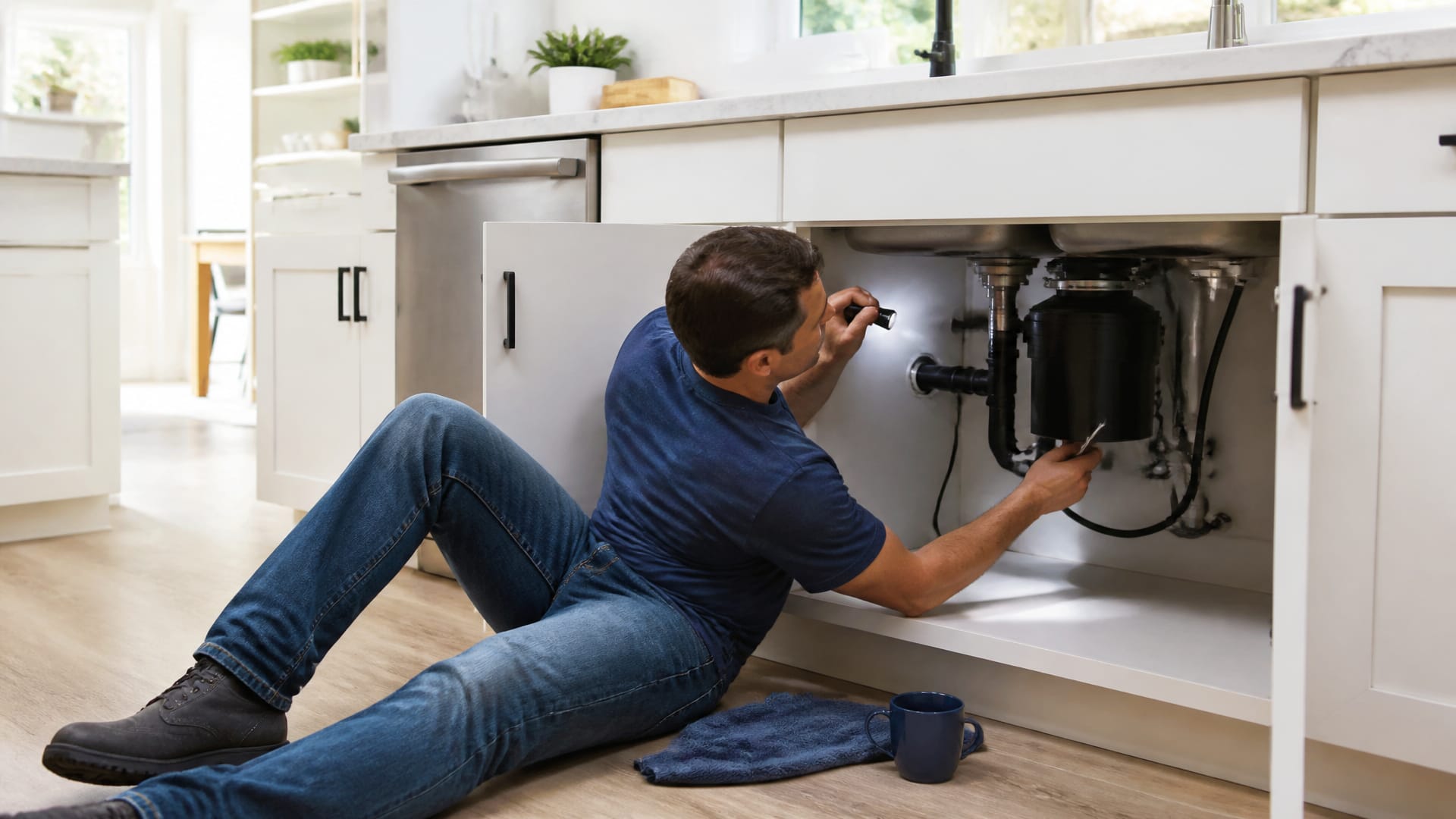
Your garbage disposal won't turn on for three common reasons: the breaker tripped, the unit jammed, or the motor failed. Start with the safest fixes first - flip the wall switch off, check the GFCI outlet and breaker, press the reset button under the sink, then clear a jam if the unit hums but does not spin. If it stays dead with no sound, the disposal or its wiring may need a pro.
Quick Checklist
- Turn off the disposal switch first.
- Check the GFCI outlet and breaker.
- Press the reset button under the sink.
- Listen for hums or clicks.
- Clear a jam only with power off.
- Test the unit with cold water.
Daily Checklist
- If your garbage disposal dead no sound problem started after breakfast, check the easiest thing first - the breaker tripped garbage disposal circuit may have shut it off. Head to the panel and look for a switch that sits between positions, then flip it fully off and back on.
- Find the GFCI outlet if your kitchen sink disposal plugs into one under the sink or nearby. Press the reset button on that outlet, since a small surge or splash can trip it.
- Press the disposal reset button under the unit for one firm second. InSinkErator notes that overloads and jams can trip the reset, and a reset can bring the motor back online (https://www.insinkerator.com/en-us/support/resetting-a-garbage-disposal).
- If you hear a low hum but no spinning, stop there. That usually points to a jammed disposal, not a dead motor, and Moen's unjam steps match that pattern (https://solutions.moen.com/Article_Library/How_to_Unjam_a_Garbage_Disposal).
- Use tongs, never your hand, if you need to pull out a bone, fruit pit, or spoon. Sounds excessive? It isn't.
- After a reset or jam fix, run cold water and flip the switch for just a few seconds. Cold water helps carry loosened scraps through the drain.
- If nothing happens - no hum, no click, no movement - check whether other outlets on that counter still work. A no-power issue can be in the outlet, cord, breaker, or the disposal itself (https://solutions.moen.com/Article_Library/Garbage_Disposal_Has_No_Power).
The good news is that many disposal problems are simple. You can often tell the difference in under 10 minutes.
Weekly Checklist
- Run the garbage disposal with cold water once or twice a week, even if you did not use it much. That keeps the impeller area from drying out and sticking.
- Listen for a slow-down, rattle, or louder grind. Those are early signs that a jam is forming, especially after dinner cleanup or a big Sunday meal.
- Look under the sink for drips around the flange, the top ring where the unit meets the sink. A small leak can lead to corrosion and electrical trouble later.
- Check the power cord and outlet area for a loose plug. A plug that works itself out a little can make the disposal seem dead with no sound.
- Keep one small flashlight and one 1/4-inch Allen wrench in the kitchen drawer. Most disposal brands use a hex-shaped socket on the bottom for manual turning.
- Do not put grease, pasta clumps, celery strings, coffee grounds, or eggshell piles into the kitchen sink disposal. Those items can make future jams more likely.
- If the unit needs a disposal reset more than once in a week, stop using it until you inspect for a larger issue. A recurring reset problem can mean overheating or a worn motor.
I like the simple habit of running cold water for a few seconds before and after use. It's boring, and it works.
Monthly Checklist
- Inspect the breaker panel once a month, especially in older homes or after a storm. In parts of Florida, Texas, or the Midwest, a brief power flicker can trip a kitchen circuit without warning.
- Test the GFCI outlet under the sink by pressing reset and then test. If it refuses to hold, the outlet may need replacement by a qualified electrician.
- Clean the splash guard at the top of the sink opening with dish soap and an old toothbrush. Built-up grime can make smells worse and hide small food bits.
- Use a few ice cubes and a little cold water to help knock loose soft buildup. Skip harsh drain cleaners; they can damage disposal parts and are rough on plumbing seals.
- Check the reset button location so you can reach it fast. On many units, it sits on the bottom and may pop out slightly after overheating.
- Listen for a motor that tries to start, then cuts out. That pattern can point to a failing motor or a stubborn jam that did not fully clear.
- Compare the age of the unit to the repair cost. If a technician quote is around $150 to $300 and the disposal is near the end of its life, a basic replacement may make more sense than repeated service calls. A plain 1/2-horsepower model often runs about $90 to $180 at big-box stores, while better 3/4-horsepower units can land closer to $150 to $250.
If you have a basic $15 flashlight and a sturdy pair of gloves, you already own most of what you need. That is usually enough for diagnosis.
Seasonal Checklist
- Before holiday cooking or a summer cookout, test the disposal before guests arrive. That's the wrong moment for a surprise failure.
- After winter storms or summer outages, check the breaker and the outlet first. Power blips can leave the disposal silent even though the rest of the kitchen seems fine.
- In fall, when school schedules and weeknight dinners get busy, clear out the cabinet under the sink. You want easy access to the reset button, plug, and flashlight.
- Before a long vacation, run the disposal with cold water and a few small ice cubes. Then leave it clean so food waste does not sit and harden.
- If your home is in a hard-water area, watch for mineral buildup around the splash guard and drain opening. California, Arizona, and parts of the Mountain West see this a lot.
- After heavy holiday use, give the unit a careful listen. A disposal humming but not spinning after a big meal usually means a jam needs attention, not a total replacement.
- If you smell a hot electrical odor, shut the switch off and stop using the disposal. That is a sign to call a licensed plumber or electrician, depending on whether the problem looks mechanical or electrical.
Seasonal checks sound fussy. They save time later.
Why won't my garbage disposal turn on?
The most common reasons are a tripped breaker, a tripped GFCI outlet, a pressed-in reset button, a jam, or a failed motor. InSinkErator recommends checking the power source first, then the reset button, then the unit itself if it still will not start (https://www.insinkerator.com/en-us/support/garbage-disposal-wont-turn-on-or-off).
If your garbage disposal won't turn on and you also hear nothing at all, the problem is usually power-related. If it hums, the unit likely has power but the blades or impeller are stuck. That difference matters because it tells you whether to reset, unjam, or replace.
How do I reset a garbage disposal?
Yes, you can usually reset it yourself. Turn off the switch, wait 30 seconds, press the red or black reset button on the bottom of the unit, then restore power and test with cold water. If the garbage disposal reset button not working problem keeps coming back, the unit may be overheating or jammed again (https://www.insinkerator.com/en-us/support/resetting-a-garbage-disposal).
Some models need a firmer press than people expect. If the button pops back out right away, don't keep forcing it. Move to the jam check next.
What does it mean if the disposal hums but doesn't spin?
It usually means the motor is trying to work, but the disposal is jammed. A spoon, bone, pit, or thick food scrap can stop the impeller from turning even though power is present. Moen's jam guidance points to this exact symptom and says to clear the obstruction with the power off before resetting the unit (https://solutions.moen.com/Article_Library/How_to_Unjam_a_Garbage_Disposal).
Unplug the unit or shut off the breaker before you reach near it. Use the hex socket and Allen wrench on the bottom, if your model has one, to turn the motor manually and free the jam. Then press reset and test again.
Is my garbage disposal jammed or broken?
It might be jammed if it hums, clicks, or briefly moves before stopping. It may be broken if it is totally silent after you have checked the breaker, outlet, and reset button. Moen and InSinkErator both note that no-power symptoms can point to the outlet, wiring, or the disposal motor itself (https://solutions.moen.com/Article_Library/Garbage_Disposal_Has_No_Power).
A jam is a DIY fix for many homeowners. A burned-out motor, a bad switch, or damaged wiring is not. If you smell burning, see sparks, or keep tripping the breaker, call a licensed pro.
For more home fixes like this, you can explore more US Home Maintenance & Seasonal Care tips.
Here is the brighter side: most disposal problems give you a clue before they fail completely. Silence points to power. A hum points to a jam. A hot, dead unit points to a motor or wiring issue. Start with the safest check, and you may have your sink back before the dishes pile up.
[SEARCH] SEARCH DESCRIPTION - Copy & paste this into the Blogger Search Description field:
Garbage disposal won't turn on? Learn how to tell a tripped breaker from a jam or dead motor, then reset, clear, and test it safely.
Character count: 132 / 150 - Primary keyword: garbage disposal won't turn on
Google Search Trend Rank: #11
Source: Google Trends + current US web/search evidence
Checked: 2026-09-16T00:00:00Z
Comments
Post a Comment
💡 You don't need an account! Select "Name/URL" or "Anonymous" from the dropdown to post.