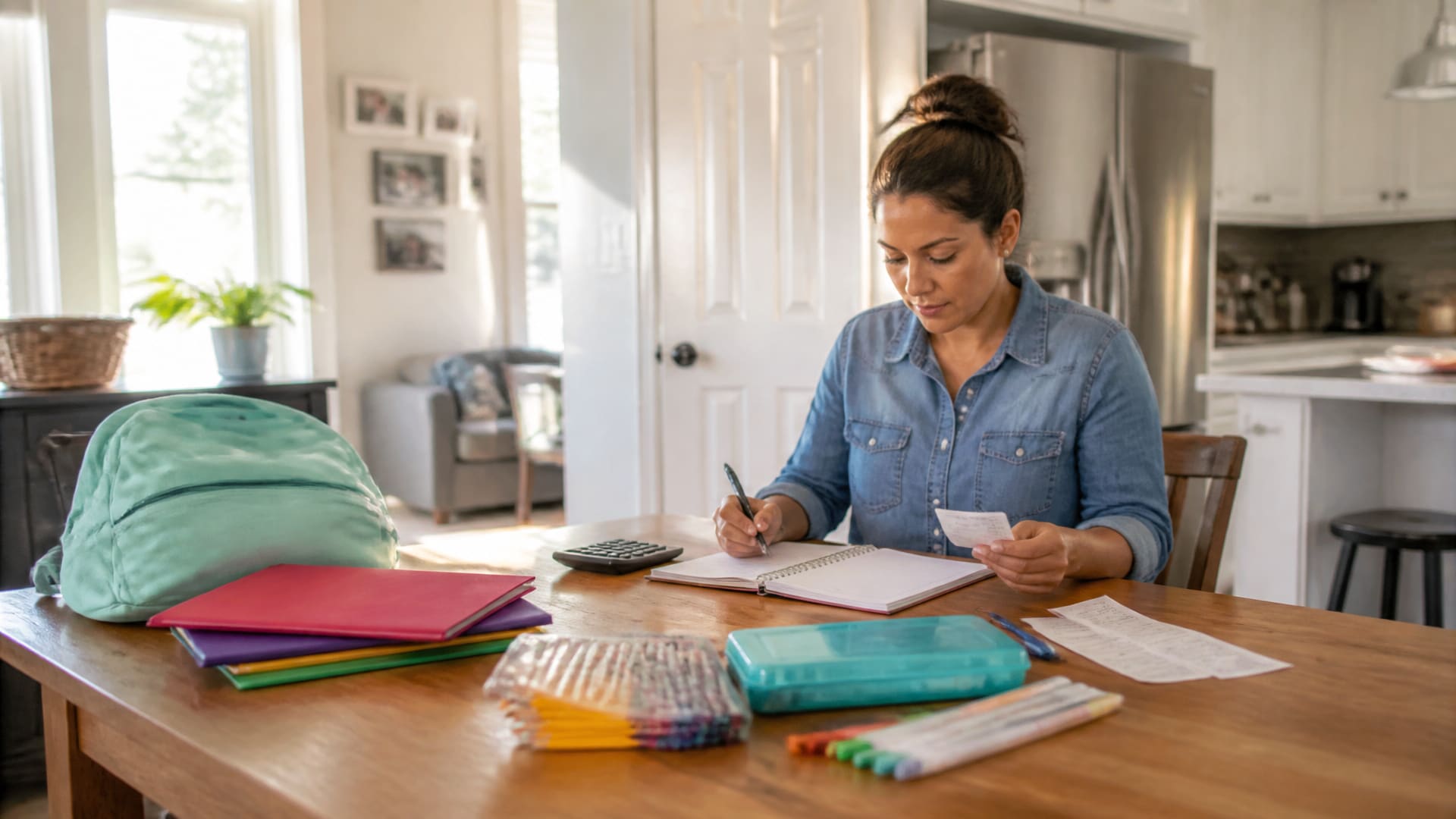
School supply list shopping on a budget gets easier when you stop buying by habit and start buying by the list. In my own back-to-school shopping runs, the money drain was not the big items. It was the extra glue sticks, the duplicate pink erasers, and the second box of tissues I grabbed because it was on sale. If you are trying to figure out how much do school supplies cost for one child, what school supplies are actually needed, or where to buy school supplies cheapest, the short answer is this: compare the teacher list to what you already have, buy the required items first, and leave the extras for later if the teacher does not ask for them.
Quick Diagnose
- If your cart keeps growing, you are probably buying duplicates, not necessities.
- If the list looks huge, check whether items are individual supplies or classroom-share items.
- If the price jumps fast, focus on the exact brands only when the school requires them.
- If you are shopping in August, the best time to buy school supplies may already be partly gone, but you can still save.
School Supply List Shopping on a Budget
The fastest way to keep school supply cost down is to build the cart in layers. I start with the exact list from the teacher, then I match it against what is already in the junk drawer, pencil cup, and last year's backpack. That simple check usually cuts the bill before I ever leave the house. According to NerdWallet's 2026 back-to-school shopping report, families still feel the squeeze even when they are trying to spend less, which matches what I see at Walmart, Target, and Dollar Tree every July and August.
For one child, a basic school supply list can land around $25 to $60 if you already own a backpack and lunch gear. If you need a new backpack, water bottle, headphones, and a few brand-name items, the total can climb to $75 to $150 or more. I have had one elementary list come in at $38 at Walmart in Ohio and another hit $92 at Target in Texas because the teacher wanted specific folders, dry-erase markers, and two large boxes of tissues.
Sounds excessive? It isn't. The trick is knowing what actually belongs in the cart.
Symptom #1: Your Cart Has More Items Than the List
Likely Cause
You are shopping for peace of mind, not the actual assignment. That happens fast in school shopping aisles because every display screams backup notebooks, extra crayons, and value packs. I used to do this at Staples after school pickup and end up with three spiral notebooks when the list only asked for one. The result was a bigger receipt and a box of untouched supplies under the bed.
Duplicate buying also happens when the list is vague. A line that says "folders" does not mean six folders unless the teacher said six. A line that says "pencils" does not always mean two giant 100-count boxes. If your child has a shared classroom supply list, you may be buying items for the whole class, not stocking your own home.
The Fix
Split the list into three piles: must buy now, maybe later, and already have. Then check each item once, not five times. I do this with a kitchen table, a highlighter, and a cheap legal pad. It takes about 20 minutes, and it stops the worst duplicate buys.
Use this order: compare the paper list to what is in the house, then buy the exact count, then stop. If the school asks for two glue sticks, buy two. If it asks for a box of crayons, buy one. If you find a cheaper pack of six but only need two, skip it unless you truly will use the rest at home. That is the heart of cheap school supply list shopping tips. It sounds strict. It saves money.
- Check backpacks, pencil cases, desk drawers, and glove boxes before shopping.
- Put leftovers in one bin so they are easy to find next year.
- Use a marker to cross off each item as you place it in the cart.
Symptom #2: You Are Buying the Wrong Type of Supply
Likely Cause
Some school supply lists look simple, but the details matter. A teacher may ask for wide-rule notebooks, Fiskars scissors, or composition books instead of spiral notebooks. I learned this the hard way in a Maryland school supply run when I bought narrow-rule notebooks because they were cheaper. They stayed in the car while I went back for the right ones.
The same issue shows up with markers, crayons, and folders. A classroom may want two-pocket folders without prongs, or a specific color for each subject. Buying the wrong version is not really saving. It is just a second trip.
The Fix
Read each line like it costs money, because it does. If the list says 24-count crayons, buy 24-count crayons. If it says headphones with a 3.5 mm plug, do not grab Bluetooth buds. If you are unsure, ask the teacher or school office before checkout. One quick message in June can save a second shopping run in August.
Consumer Reports recommends buying the must-have items first and waiting on non-urgent extras, which is solid advice if your child might get a revised list during the first week of school. That approach matters most for things like notebooks, folders, and pencils. It matters less for custom items that schools almost never change, such as a backpack or lunchbox.
- Buy exact sizes for notebooks, binders, and scissors.
- Wait on extras like decorative stickers or fancy gel pens.
- Keep receipts in one envelope for 14 days.
Symptom #3: The Receipt Feels Too High
Likely Cause
You may be shopping in the wrong store for each category. In my own runs through Michigan and Georgia, I found that one store had cheap pencils but pricey binders, while another had the reverse. The Krazy Coupon Lady's store comparison approach lines up with what I have seen in real life: no single store is cheapest for every item.
The other budget killer is buying brand names when the school does not require them. Ticonderoga pencils are nice. They are also more expensive than basic pencils. Crayola crayons are solid. They are not the only crayons that work. If the list does not name a brand, you usually do not need one.
The Fix
Shop by category, not by loyalty. I usually buy paper goods and folders at Target or Walmart, pencils and pens at Dollar Tree or a warehouse club, and larger items like backpacks where the mark-down bin is strongest. That mix is often cheaper than doing one big cart at one store. If you have a membership at Costco or Sam's Club, compare the per-item cost before you go.
Also watch for state tax breaks. Florida's sales tax holiday page shows how some school supplies can qualify for a limited window, and other states often run similar events. If your state has one, timing your back to school shopping list on a budget around that window can shave off a few dollars without any coupon stack drama.
- Compare unit price, not just shelf price.
- Use store apps for digital coupons only if they do not slow you down.
- Skip novelty sets unless they replace something required.
Symptom #4: You Keep Rebuying the Same Thing Every Year
Likely Cause
The problem may be storage, not shopping. If last year's crayons are buried under winter gloves, you will buy another box. If backpacks are tossed in a closet without a bin, you will replace them early. I kept losing scissors for three straight Augusts until I bought a $7 plastic tote and labeled it "school supplies." That was annoying, but it worked.
This is where family habits beat last-minute back to school shopping. Supplies that live in one place stay visible. Visible supplies get used up before replacement. That is the easiest way to avoid duplicate purchases.
The Fix
Make one home base for school supplies. A kitchen shelf, mudroom basket, or closet bin works fine. Put surplus pencils, spare glue sticks, unopened tissues, and extra notebooks there after shopping. Then check that bin before every season, especially during spring cleanups and the week before school starts.
If you want more ideas for family organization and screen-free routines, you can explore more Parenting Guides, Kids Activities & Screen-Free Play Ideas tips. Small systems help more than big hauls. Honestly, a plain bin beats a chaotic closet every time.
When to Call a Pro
- If the school list is confusing or conflicts with another notice, call the school office or teacher before buying anything expensive.
- If your child needs special headphones, an adaptive pencil grip, or another accommodation, ask the school counselor or special education staff for the exact requirement.
- If you are unsure whether a store offer is a real savings, ask the cashier to check the unit price or use the store app at the register.
- If you are buying tech like a laptop, tablet, or calculator with class-specific rules, confirm the model with the school before spending big money.
For normal school supplies, you do not need a professional. For item requirements tied to learning needs, district rules, or device specs, a quick call is smarter than guessing.
Prevention Checklist
- Sort last year's leftovers before the new list arrives.
- Keep one supply bin in a visible spot.
- Take a photo of the school list so you can shop from your phone.
- Buy only the exact count unless the teacher says extras are welcome.
- Check whether your state has a back-to-school sales tax holiday.
- Compare prices at Walmart, Target, Dollar Tree, Staples, and warehouse clubs before you buy.
- Save receipts for price adjustments and returns.
- Wait on fancy extras until the first week of school settles down.
One small habit helps a lot: write the date and store name on the receipt before you toss it in your bag. I started doing that after a $12 pack of markers went back to the store two days later. Simple. Boring. Effective.
FAQ
How much do school supplies cost for one child?
For one child, basic school supplies often run about $25 to $60 if you already own the bigger items. If you need a backpack, lunch gear, or brand-name products, the total can land closer to $75 to $150. Your final number depends on grade level and whether the school asks for shared classroom supplies.
What school supplies do kids actually need?
Kids usually need the exact items on the teacher list, plus a backpack and a lunch setup if the school does not provide one. Most lists include pencils, notebooks, folders, crayons or markers, glue sticks, scissors, and tissues. If an item is not listed, skip it unless you know your child will truly use it.
Where can I buy school supplies cheapest?
The cheapest place changes by item, so one store is rarely best for everything. Dollar Tree, Walmart, Target, Staples, warehouse clubs, and local tax-free sale events can all win on different products. I get the best results by buying paper goods in one place, pencils in another, and larger items only where the discount is real.
One Last Pass Before You Check Out
Before you hit buy, ask one question: "Do I need this exact item, or am I buying a backup I will forget about?" That question has saved me more money than any coupon code ever did. Leave the store with the list, not with extras. Your wallet will notice.
Comments
Post a Comment
💡 You don't need an account! Select "Name/URL" or "Anonymous" from the dropdown to post.