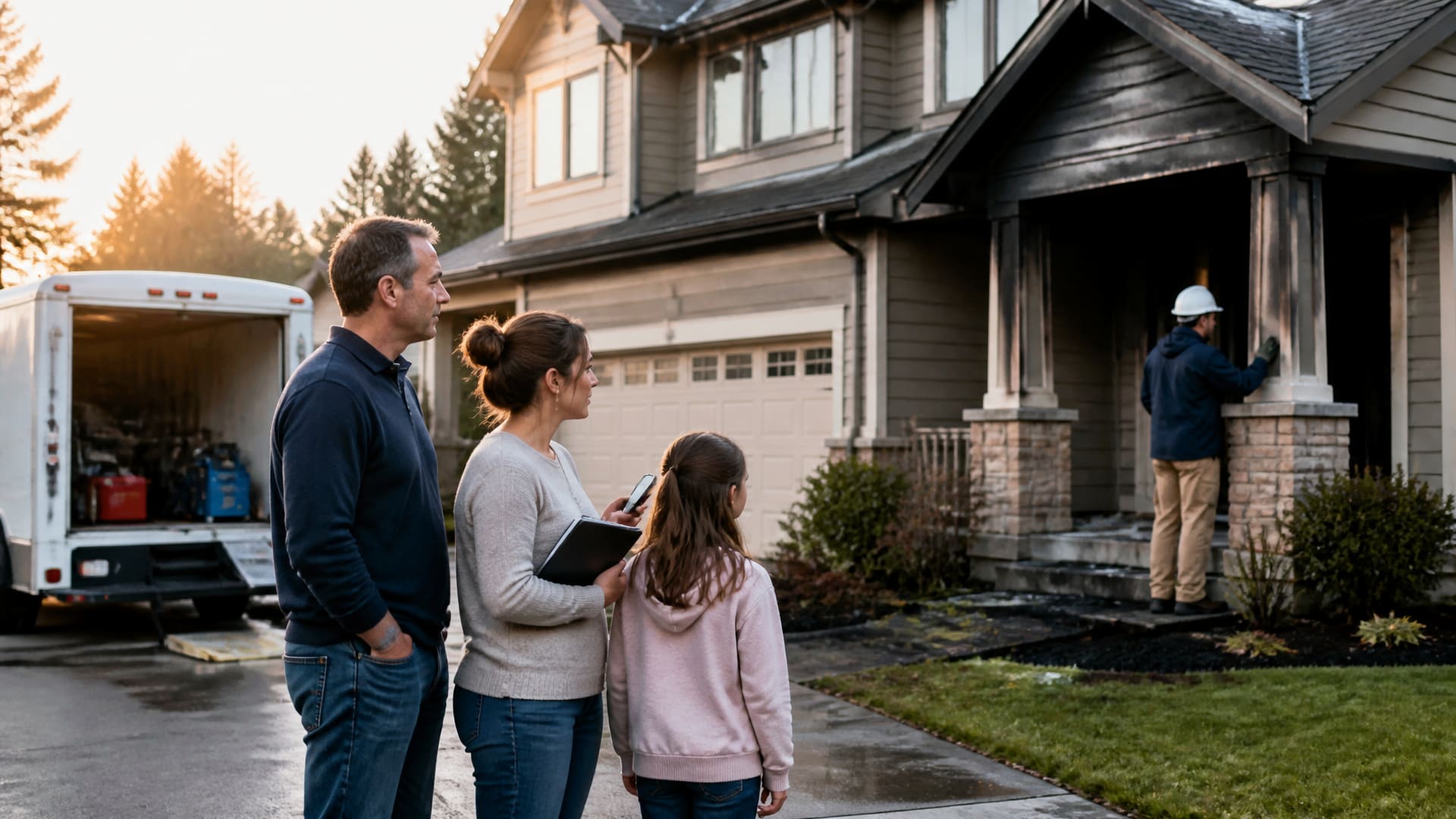
If you are trying to figure out what to do after a house fire, start with safety, then document everything, then call your insurer before you clean. If smoke damage is present, do not re-enter until firefighters or local officials say it is safe, and do not throw away damaged items or start major cleanup before the adjuster sees them. That order protects you from injury, weak claims, and avoidable repair mistakes.
What to do after a house fire
The first hours after a house fire are about securing the property and preserving proof. You want to make the home safe from more damage, get your insurance claim moving, and avoid doing anything that could erase evidence of fire damage or smoke damage. If you are asking what to do first after house fire smoke damage, this is the sequence that works: safety, photos, insurer, then limited emergency steps.
Quick Comparison
- Do: wait for clearance, document damage, and call your insurer right away.
- Do not: toss ruined items, scrub soot, or sign repair contracts too fast.
- Best first tools: phone camera, charger, notebook, plastic bins, N95 masks, gloves, and a flashlight.
- Best order: safety check, photos, claim, temporary protection, then cleanup planning.
- Get the all-clear before you go back inside. If firefighters left the scene, ask whether the structure is safe, whether utilities are off, and whether there is a risk from weak floors, hidden embers, or carbon monoxide. Ready.gov warns that burned areas can still hide hazards after the flames are out, so can i stay in my house after smoke damage is a question only a safety check can answer (source).
- Call your insurance company from a safe place. Start the claim as soon as you can. The California Department of Insurance says to report the loss quickly and avoid major permanent repairs before the adjuster inspection, because those changes can make it harder to verify fire damage (source).
- Take wide and close photos. Photograph every room, every doorway, the roofline if visible, appliances, cabinets, clothing, furniture, and soot on walls and ceilings. Then take close-ups of serial numbers, brand labels, and burned edges. Use your phone's timestamp if possible. This is how to document fire damage for insurance without guessing later.
- Make a simple room-by-room list. Write down what is damaged, what may be salvageable, and what is missing. Include rough values if you know them. A spreadsheet works, but a notebook from the kitchen drawer works too. Keep receipts for hotel stays, replacement clothes, pet boarding, and meals if your policy covers additional living expenses.
- Protect the property without disturbing evidence. If the roof is open or a window is broken, cover it with a tarp or board it up. If you can do that safely, fine. If not, hire an emergency board-up company. Temporary protection is usually cheaper than letting rain turn a smoke problem into a mold problem two days later. Honestly, a basic emergency tarp kit for $47 can save you from a much bigger claim mess.
- Separate what you can save from what should stay put. Keep damaged items until the insurer has assessed them unless they pose an immediate health risk. The Insurance Information Institute notes that insurers may need to inspect damaged property, including smoke-damaged items, before you discard anything (source).
That first hour sounds busy. It is. But most of the work is simple if you keep your hands off the wrong things.
Option A: Secure the property and preserve evidence
This option means you treat the home like an active claim site. You are not trying to make it pretty yet. You are trying to keep it stable, document the fire damage, and prevent weather, theft, or a hasty cleanup from creating a second loss.
For many households, this is the better choice in the first 24 to 72 hours. It fits if the damage is moderate, if the house is still standing, or if you need to prove smoke damage in rooms that look untouched but smell bad. Soot can travel far. A kitchen fire can leave odor in bedrooms, HVAC ducts, and closets on the second floor.
- Pros: protects your claim, lowers the chance of extra damage, and gives the adjuster a clean record to review.
- Pros: works even if you are staying in a hotel or with family for a few nights.
- Cons: feels slow when you want the house cleaned now.
- Cons: takes discipline, because wiping one wall with the wrong cleaner can smear soot and spread residue.
For tools, keep it basic. A phone, charger, battery pack, flashlight, paper towels, contractor trash bags, N95 respirators, and nitrile gloves are enough for most first steps. If you are in Arizona heat or a Gulf Coast summer, add water and avoid long periods inside. If the power is off, you may need a dehumidifier later, but not before the adjuster sees the original condition.
I prefer this route when the damage is mostly smoke and water rather than total destruction. It gives the insurer a fair record, and it gives you time to compare repair bids instead of rushing into the first contractor pitch that shows up in your inbox.
Option B: Start limited cleanup and emergency mitigation
This option is for safety and damage control, not for deep cleaning. It means you remove obvious hazards, dry wet materials, and stop the home from getting worse while leaving the main evidence intact. Think of it as stabilization, not restoration.
It fits if a firefighter told you a broken pipe, melted line, or open window is letting in rain, or if you have a rental property where you must prevent more loss fast. A wet home can move from fire damage to mold risk in as little as a day or two in warm weather, especially in places like Florida, Louisiana, or coastal Texas.
- Pros: can prevent water damage, mold growth, and theft.
- Pros: useful if the insurer asks you to take reasonable temporary steps.
- Cons: easier to overdo.
- Cons: the wrong scrub brush, cleaner, or pressure washer can make smoke damage harder to document and harder to remove later.
If you must do emergency cleanup, focus on dry, loose debris that is clearly unsafe, such as broken glass, collapsed drywall, or soaked cardboard. Leave soot, charred framing, and stained fabrics alone until you know whether they can be restored. For suspected indoor air issues, hire a certified fire restoration company. A HEPA vacuum is useful for fine ash, but only if you know how to use it on the right surfaces. Sounds excessive? It isn't.
If you are trying to clean smoke damage safely, do not use bleach on soot. Do not paint over residue. And do not run the HVAC system until the ducts and filters are checked, because that can push smoke particles into rooms that were untouched by the fire.
Side-by-Side Comparison
- Property goal: Option A protects evidence; Option B prevents new damage.
- Insurance goal: Option A gives the strongest record; Option B should stay limited and carefully documented.
- Risk level: Option A has lower cleanup risk; Option B has more chances to make a mistake.
- Best time: Option A is the first choice in the first 24 hours; Option B is only for urgent mitigation.
- Typical cost pattern: Option A may cost almost nothing beyond phone photos and tarps; Option B can range from under $100 for supplies to several hundred dollars for board-up help, dehumidifiers, or emergency service calls.
- Best fit: Option A suits most homeowners; Option B fits homes with rain exposure, broken windows, or water intrusion.
Which One Fits You?
Choose the path that matches the scene in front of you, not the one that feels fastest.
- You should lean toward Option A if the fire is out, the structure is standing, and your main problem is smoke damage or proof of loss.
- You should lean toward Option B if there is active water entry, a missing window, or a safety issue that will worsen by morning.
- You should hire a pro if the roof is unstable, the smell is heavy in the walls, electrical panels were exposed, or the fire involved appliances, lithium-ion batteries, or attic wiring.
- You should wait on cleanup if you are exhausted and tempted to throw everything away on a Saturday afternoon. That urge is common. It is also costly.
For a lot of households, the smartest move is a mix: secure the home today, then bring in a restoration company after the insurer documents the loss. If you want more home-readiness advice after this crisis, you can explore more Home Security Systems, Emergency Preparedness & Family Safety tips.
FAQ
What should I do immediately after a house fire?
Get yourself and your family to safety, then call the fire department or local officials before going back inside. After that, contact your insurer, start photos, and protect the home from weather or theft if it is safe to do so. The first hour is about safety and proof, not cleanup.
Can I go back inside after smoke damage?
Yes, but only after firefighters or another qualified authority say it is safe. Smoke damage can come with hidden hazards like weakened ceilings, toxic residue, and carbon monoxide. If the structure has not been cleared, stay out.
How do I start the insurance claim process after fire damage?
Call your insurer, open the claim, and ask what they want you to document first. Then send photos, a room list, receipts, and any temporary repair invoices. The California Department of Insurance advises homeowners not to make extensive permanent repairs before the adjuster inspection, because that can complicate the claim (source).
What not to do after a house fire
Do not throw out damaged items before the insurer sees them unless they are a health hazard. Do not scrub soot with random cleaners. Do not sign a repair contract on the spot. And do not switch on the heat or air conditioning until someone checks the system, because that can spread soot and odor.
The cleaner the record, the cleaner the claim. That is the practical rule.
Start with photos, a claim call, and one temporary fix if the house is exposed. Then wait for the adjuster before you make the next move.
Comments
Post a Comment
💡 You don't need an account! Select "Name/URL" or "Anonymous" from the dropdown to post.