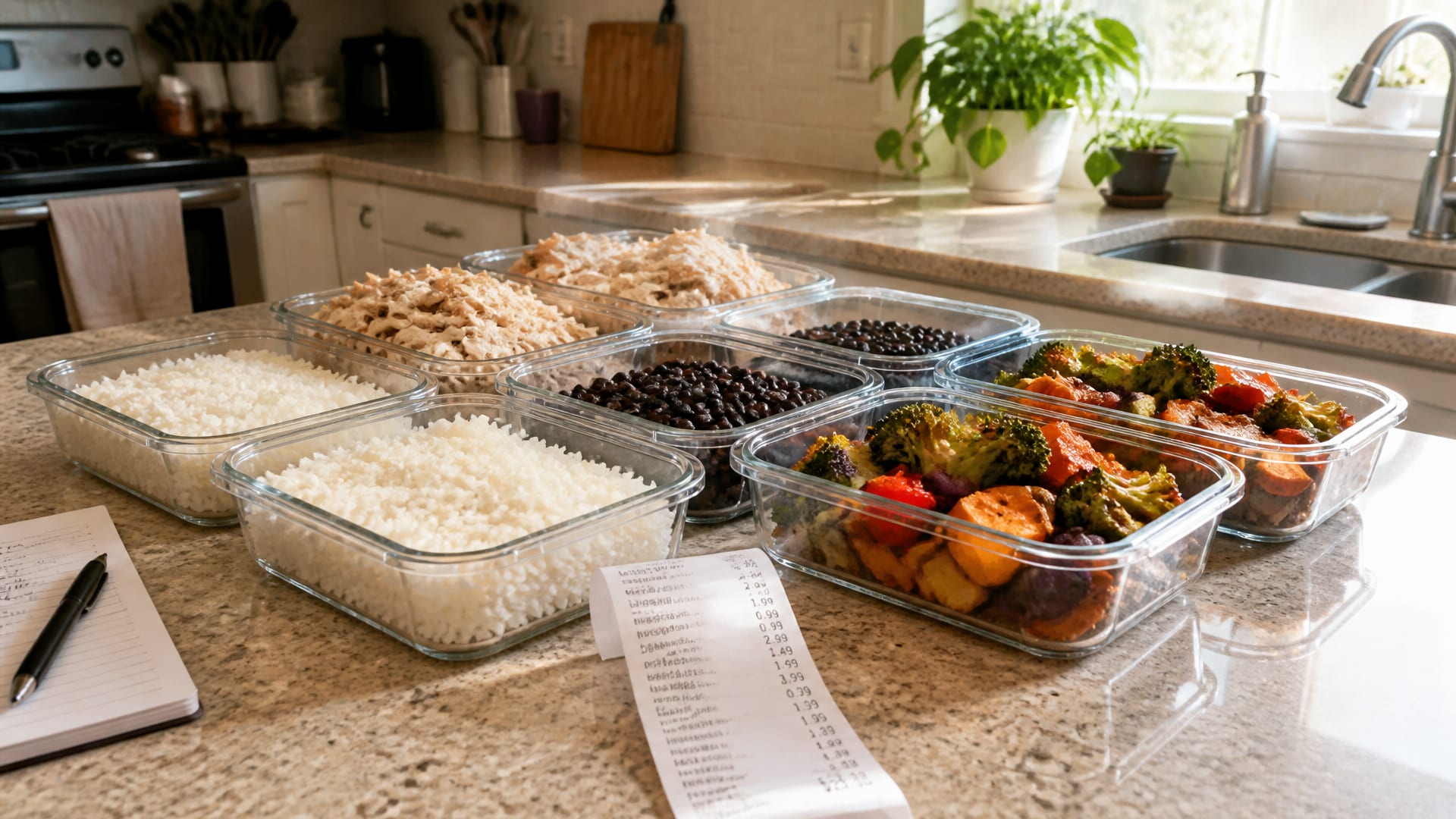
To master how to meal prep cheap lunches for work, rely on an interchangeable formula: one bulk grain, one low-cost protein (canned tuna, eggs, black beans, chicken thighs, or lentils), two frozen vegetables, and one distinct sauce. Spend 60 to 90 minutes batch-cooking on Sunday and portion directly into five airtight containers. Following this system delivers cheap healthy lunches for work meal prep for roughly $2.50 to $4.00 per meal while avoiding expensive daily takeout.
You get home at 6:40, stare into the fridge, and suddenly dinner feels like a hostage negotiation. That is exactly why how to meal prep cheap lunches for work matters. A consistent cheap lunch meal prep strategy provides reliable work lunch prep that actually survives Monday through Friday, keeps budget lunches sane, and helps you assemble cheap healthy lunches for work meal prep without cooking like you run a commercial cafe.
The secret is not complicated culinary technique; it is mastering repeatable formulas: one starch, one protein, one vegetable, and one sauce. If you want to know how to meal prep lunches for a week on a budget, start with durable ingredients that hold up well in cold storage, cost less per pound, and can be rotated into three distinct variations so weekday eating never feels repetitive. The best budget lunches to prep ahead are the reliable staples: brown rice bowls, tuna pasta salad, bean chili, stuffed wraps, and quinoa grain bowls.
Quick Checklist
- Select 1 base grain, 1 budget protein, 2 hearty vegetables, and 1 flavorful sauce.
- Prioritize store brands, bulk family packs, and flash-frozen vegetables to keep costs low.
- Batch-cook all five work lunches simultaneously during a single Sunday afternoon session.
- Use microwave-safe, BPA-free glass or durable plastic containers with airtight seals.
- Pack dressings and wet condiments separately to keep texture crisp and prevent sogginess.
- Follow established food safety cold-storage charts to rotate meals into the freezer by day three.
- Supplement with whole apples, bananas, or Greek yogurt cups for filling, affordable snacks.
Daily Checklist: Structuring Your Midday Meal
If you want cheap lunch meal prep that maintains its quality through Thursday and Friday, think like a high-volume line cook with an eye on receipts. You are not crafting five-star restaurant presentations; you are assembling satisfying work lunch prep containers that taste good when your brain is drained by midday deadlines.
- Choose one complex base: Brown rice, whole-wheat pasta, roasted sweet potatoes, or corn tortillas provide slow-burning energy. A $1.99 bag of white or brown rice supplies a week of clean carbohydrates that outperform packaged snack foods.
- Pick one affordable protein: Hard-boiled eggs, black beans, lentils, whole rotisserie chicken, canned chunk light tuna, or firm tofu anchor your budget lunches. Beans and lentils are particularly cost-effective, nutrient-dense, and structurally resilient in containers.
- Add two vegetables: Frozen broccoli florets, chopped green cabbage, carrots, sweet corn, and green peas stretch your grocery budget. Frozen vegetables are harvested at peak ripeness and prevent the waste of perishable greens that turn soggy by Tuesday.
- Use one dynamic sauce: Chunky salsa, Thai peanut sauce, homemade vinaigrette, marinara, or teriyaki transform basic ingredients into appealing meals. A great sauce is what separates satisfying food from boring diet fare.
- Standardize portion sizes: A balanced adult serving consists of roughly 1 to 2 cups of grain, 3 to 5 ounces of cooked protein, and 1 cup of vegetables.
- Select appropriate containers: Tempered glass meal prep containers resist stains and odors, while lightweight BPA-free containers are ideal for transit. Compact rectangular containers stack neatly in standard office refrigerators.
- Label container lids: Mark container tops with masking tape and prep dates so you eat older meals first and avoid food safety surprises.
For versatile lunch prep ideas that maintain integrity under heat, prioritize grain and bean bowls. The Cleveland Clinic confirms that meal planning with resilient whole foods preserves meal texture and ensures balanced nutrition across demanding work weeks (Cleveland Clinic: Meal Prep Ideas for Breakfast, Lunch and Dinner).
Weekly Checklist: Streamlining Prep and Cutting Grocery Costs
Here is where you save money: one consolidated grocery trip, one focused cooking window, and one cleanup routine. If you are researching how to meal prep cheap lunches for work, repeat the same base grocery list each week and adjust seasonings rather than buying entire new ingredient sets.
- Plan the five-day menu before shopping: The USDA MyPlate program highlights intentional meal planning as the single most effective strategy to minimize grocery waste and lower food expenditures (USDA MyPlate: Healthy Eating on a Budget).
- Leverage private-label store brands: Purchasing store labels from regional grocers like Aldi, Walmart (Great Value), Kroger, or Target immediately lowers receipt totals by 20% to 30% without sacrificing basic ingredient quality.
- Buy bulk starches and proteins: Ten-pound bags of long-grain rice, dry pinto beans, and family-pack poultry cuts yield considerably lower unit costs than pre-portioned deli kits.
- Establish a 90-minute prep block: Dedicate an uninterrupted hour and a half on Sunday afternoon to roast vegetables on sheet pans, boil grains, and portion proteins.
- Portion meals immediately: Divide cooked food into individual containers while hot rather than leaving large pans in the refrigerator. Immediate portioning controls serving sizes and seals in freshness.
- Alternate hot and cold lunches: Combine microwaveable chicken rice bowls with chilled pasta or chickpea salads to prevent palate fatigue throughout the week.
- Repurpose dinner leftovers: Roast extra bell peppers or sweet potatoes during weeknight dinners and fold them directly into the next day's grain bowl or lunch wrap.
Adhering to strict food safety practices protects household health. Consult FoodSafety.gov's official storage standards to know which cooked proteins remain safe under refrigeration for 3 to 4 days, and which should be frozen until Thursday or Friday (FoodSafety.gov: Official Cold Food Storage Guidelines).
If you want additional systems for saving money and planning meals, explore more Practical Meal Prep & Budget Grocery Planning tips.
Monthly Checklist: Auditing Pantry Staples and Systems
Once a month, perform an inventory audit to keep your cheap healthy lunches for work meal prep efficient and within budget.
- Inventory dry goods: Count remaining bags of dried beans, rice, whole-grain pasta, and canned tomatoes before building your next monthly grocery run.
- Inspect containers and lids: Discard warped lids, cracked plastic bottoms, or compromised rubber seals that cause leaks inside your work tote.
- Track local unit prices: Compare staple costs at your local discount grocer to spot inflation changes and adjust your core recipes accordingly.
- Rotate your primary protein sources: Transition from chicken thighs to eggs, canned tuna, or black bean chili to keep weekday meals interesting.
- Sanitize cooler gear: Thoroughly wipe down insulated lunch bags, wash reusable ice packs, and clean container gaskets to maintain hygiene.
- Eliminate uneaten ingredients: If specific vegetables or sides consistently return home uneaten, stop purchasing them and substitute dependable alternatives.
- Replenish pantry spices: Low-cost seasonings such as garlic powder, smoked paprika, cumin, soy sauce, and ground black pepper elevate simple budget bowls.
A monthly expense review shows whether your process works. Achieving the goal of how to make five lunches for under 20 dollars requires eliminating single-serve convenience snacks, bottled beverages, and impulse checkout purchases.
Seasonal Checklist: Adapting Meals for Summer and Winter
Adapting your cheap lunch meal prep to the seasons prevents spoilage and keeps meals appealing year-round.
- Winter warming meals: Focus on lentil stews, turkey black bean chili, and reheatable grain bowls that handle office microwaves well.
- Spring harvest values: Take advantage of seasonal price drops on cabbage, carrots, celery, and snap peas to assemble crisp slaws.
- Summer cold lunches: Lean on cold pasta salads, marinated chickpea bowls, and bean wraps that require no heating and travel safely with cold packs.
- Autumn sheet-pan roasts: Roast seasonal root vegetables, such as sweet potatoes, butternut squash, and red onions, alongside chicken cuts for easy sheet-pan prep.
- Emergency shelf-stable items: Maintain emergency backups like tuna packets, whole-grain crackers, and peanut butter at your desk in case commuting delays disrupt your schedule.
- Insulated transit in extreme heat: Always pack perishable dairy, poultry, and egg dishes with two frozen gel packs inside an insulated cooler bag during summer commutes.
- Flexible format shifts: When busy schedules prevent detailed prep, fall back on simple egg-salad wraps, fruit, and yogurt instead of complicated recipes.
Batch cooking aligned with practical work routines is endorsed by clinical nutritionists as an effective strategy for sustainable, long-term health (Cleveland Clinic: A Beginner's Guide to Healthy Meal Prep).
Frequently Asked Questions
How do I meal prep cheap lunches for work?
To master how to meal prep cheap lunches for work, build meals using a repeatable formula: 1 cup of complex carbohydrates (rice, pasta, or potatoes), 3 to 4 ounces of budget-friendly protein (beans, eggs, tuna, or chicken), 1 cup of frozen vegetables, and 2 tablespoons of flavorful sauce. Batch-cook these components on Sunday and divide them into five separate containers to keep prep under 90 minutes.
What are the best budget lunches to prep ahead?
The best budget lunches to prep ahead include turkey black-bean chili, shredded chicken rice bowls, cold tuna pasta salads, and spiced lentil bowls. These ingredients keep their texture in the refrigerator for 3 to 4 days, freeze well, and cost under $3.50 per serving when purchased as store brands.
How do I make lunches that reheat well?
To prepare cheap lunch ideas for work that reheat well, store wet sauces, fresh herbs, and crispy toppings in separate small containers until heating. Add a splash of water to rice or pasta dishes before microwaving, cover with a loose paper towel to trap steam, and heat in 60-second intervals while stirring thoroughly.
How long do prepped work lunches stay fresh in the fridge?
According to federal food safety recommendations, cooked poultry, ground meats, seafood, and egg dishes remain fresh and safe in a refrigerator kept below 40°F for 3 to 4 days. If you are preparing meals for Thursday and Friday, place those portions in the freezer on Sunday and transfer them to the fridge the night before eating.
Summary
Preparing cheap healthy lunches for work meal prep does not require complicated cooking or hours in the kitchen. By choosing versatile bulk staples, scheduling one short prep session, and using reliable lunch prep ideas, you can lower weekly food costs while enjoying wholesome, homemade meals all week long.
Comments
Post a Comment
💡 You don't need an account! Select "Name/URL" or "Anonymous" from the dropdown to post.